
)
Natural Gas vs. Propane: Which Fuel Is Best?

Choosing between natural gas and propane is one of the biggest decisions you'll make when buying a gas grill or building an outdoor kitchen. Both fuels deliver reliable heat, excellent cooking performance, and easy ignition, but they differ in convenience, installation requirements, operating costs, and portability.
The right choice depends on how you plan to use your outdoor space. If your grill stays in one place and your home already has a natural gas connection, natural gas offers unmatched convenience with an endless fuel supply. If flexibility, portability, or easier installation are more important, propane is often the better option.
Key Takeaways
- Natural gas is supplied through underground utility lines that connect directly to your home.
- Propane is stored as a liquid inside portable cylinders that need to be refilled periodically.
- Although both fuels cook food equally well, appliances are specifically designed for one fuel or the other.
- Natural gas and propane are delivered at different pressures and require different gas valves, regulators, and burner orifices.
- Most appliances cannot safely switch fuels without an approved conversion kit from the manufacturer.
Pros & Cons of Natural Gas
If there's one thing you should know about natural gas, it's that this fuel is run through the home like any other utility. Because of this setup, those who already have a natural gas supply piped in will probably find it to be the best fuel source for their grill. Most natural gas models come with a kit that makes hooking up the grill to the gas line quick and easy, not to mention that natural gas will never run out in the middle of cooking.
| Natural Gas | Pros | Cons |
|---|---|---|
| Natural Gas | Unlimited fuel supply | Requires a natural gas connection |
| Natural Gas | Never refill or exchange propane tanks | Professional installation is often recommended |
| Natural Gas | Excellent for permanent outdoor kitchens | Grill cannot easily be moved |
| Natural Gas | Lower long-term fuel costs - ideal for frequent grilling | Higher installation costs if a gas line must be added |
| Natural Gas | Cleaner and less clutter around the grill | Not available in every locale |
Pros & Cons of Liquid Propane
Liquid propane gas is commonly used in 20 lb tanks that can be purchased or refilled at many hardware and home improvement stores. A hose and regulator are required to supply and regulate the gas to your grill. Some residences have large, in-ground propane tanks. In this case the grill would be set up for propane, but it may require a special regulator for the gas line. One of the notable advantages of propane is its portability. Freestanding grills can be moved around the patio as needed and portable grills can attach to smaller 1 lb tanks that can be found at several grocery stores and big box stores. The higher BTU output of propane makes it an excellent fuel choice for grilling, offering efficient heating and precise temperature control.
| Liquid Propane | Pros | Cons |
|---|---|---|
| Liquid Propane | No utility connection required | Tanks eventually run dry and require refilling |
| Liquid Propane | Portable and easy to relocate | Fuel refills add ongoing costs |
| Liquid Propane | Quick and simple installation | Must monitor fuel levels |
| Liquid Propane | Great for renters or homeowners who may move | Spare tanks require storage space |
| Liquid Propane | Higher heat output than natural gas | Fuel cost is generally higher than natural gas |
Is One Fuel Better for Gas Grills?

For most backyard cooks, the answer is no. A well-designed natural gas grill and an equivalent propane model produce nearly identical cooking results. You'll still be able to grill steaks, burgers, vegetables, seafood, and pizzas with excellent performance.
While propane contains more energy per cubic foot of gas, manufacturers design each grill specifically for its intended fuel. A natural gas grill is engineered to perform just as well on natural gas as the propane version performs on propane.
The cooking experience is much more influenced by grill quality, burner design, cooking grates, and heat distribution than by the fuel itself.


Natural Gas vs. Propane Outdoor Kitchens
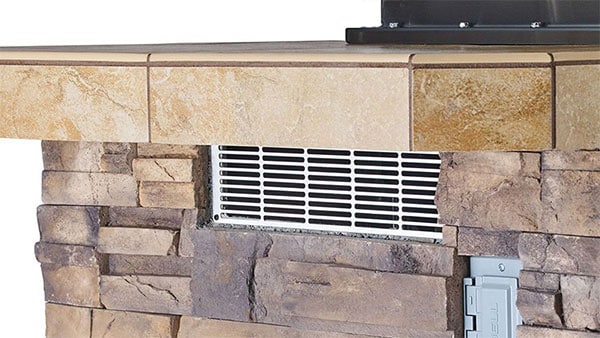
Proper ventilation is one of the most important safety considerations when installing gas appliances.
- Propane is heavier than air. Escaping gas settles near the floor of an enclosure.
- Outdoor kitchen islands must include properly sized propane ventilation openings.
- Vents should be installed near the bottom of the island. Follow manufacturer and local building code requirements.
- Natural gas is lighter than air. Escaping gas rises instead of collecting near the floor.
- Natural gas vents are typically located higher within the enclosure. Always follow the appliance manufacturer's installation instructions.
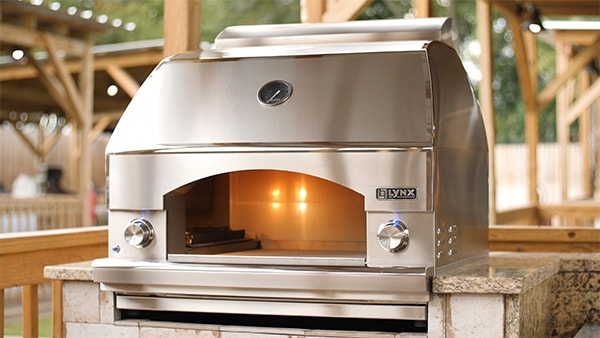
Natural Gas vs. Propane Pizza Ovens

- Propane models are generally more portable.
- Natural gas models work well in permanent outdoor kitchens.
- Verify whether your preferred model supports fuel conversion.
- Some ovens require a separate natural gas conversion kit.
- Cooking performance is similar when the oven is designed for the selected fuel.

Natural Gas vs. Propane Patio Heaters

- Both fuels provide effective outdoor heating.
- Propane models are the most common freestanding option.
- Natural gas heaters are ideal for permanent patios. Commercial spaces often prefer natural gas for continuous operation.
- Natural gas eliminates the need to replace fuel tanks.
- Verify required clearances from ceilings and combustible materials.


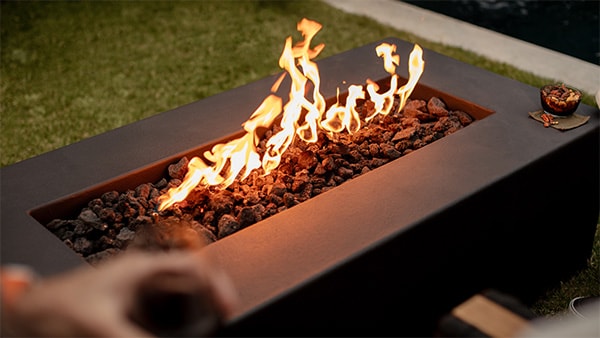
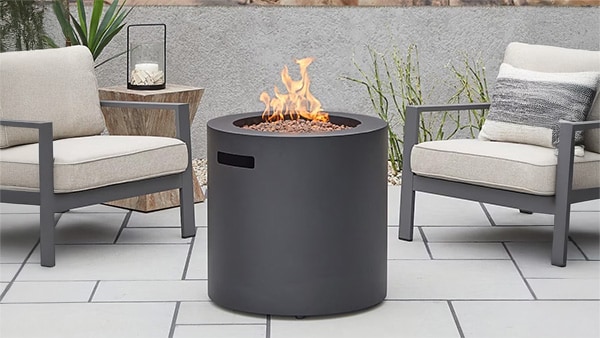
Natural Gas vs. Propane Fire Pits

- Natural gas fire pits offer continuous fuel with minimal maintenance.
- Propane fire pits are easier to install and relocate.
- Portable fire pit tables almost always use propane tanks. Built-in masonry fire pits commonly use natural gas.
- Burner components must match the intended fuel type.
- Never operate a propane burner on natural gas or vice versa.
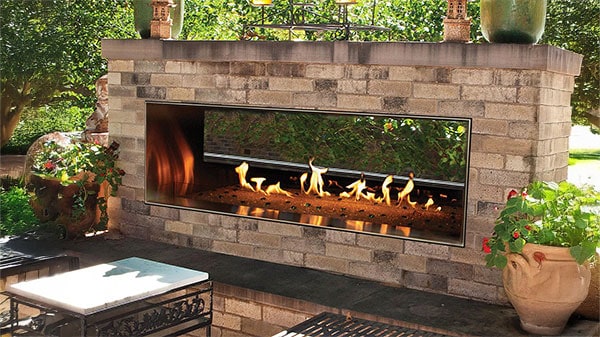
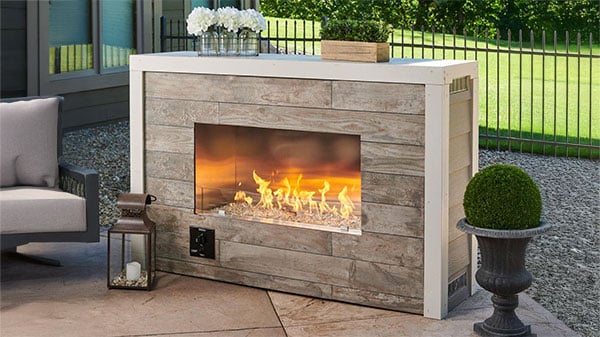
Natural Gas vs. Propane Outdoor Fireplaces

- Natural gas is often preferred for permanently installed fireplaces.
- Propane is a great option when natural gas service is unavailable.
- Vent-free and vented fireplaces have different installation requirements.
- Always follow manufacturer specifications for fuel type.
- Annual inspections help ensure safe operation.
Natural gas and propane are both outstanding choices for outdoor cooking. Neither fuel is universally better than the other. The best option depends on your home, your budget, and how you use your outdoor space.
If you're designing a permanent outdoor kitchen and already have access to natural gas, the convenience of an endless fuel supply is hard to beat. If flexibility and portability matter more, propane continues to be an excellent choice that delivers outstanding cooking performance with minimal installation requirements.
Our experts are just a phone call away and ready to assist you with personalized advice to ensure you make the most of your outdoor cooking adventures. Call us today at 1-877-743-2269 and take the first step towards your ideal outdoor space.

