
)
How to Choose a Flat Top Grill/Griddle | Buying Guide
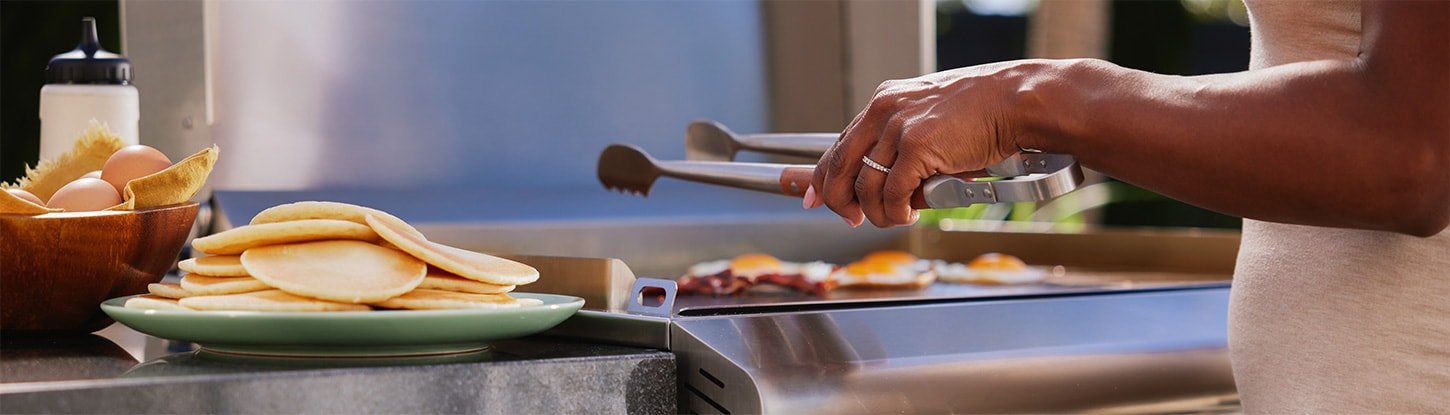
Cooking on a gas griddle is one of the easiest ways to indulge your culinary creativity. Wow your guests with effortless stir-fry or perfectly crispy smash burgers all on a single surface. These griddles are some of the most versatile cooking appliances and give home chefs the opportunity to experiment with almost any cooking style. We’ll show you everything you need to know when buying a flat top gas grill or griddle and break down all the major considerations that should be on your radar while shopping.
Key Takeaways
- Flat top griddles offer versatile cooking, from breakfast and stir-fry to smash burgers
- Choose built-in, freestanding, or portable models depending on whether you want mobility, outdoor kitchen integration, or travel
- Propane griddles offer portability, while natural gas models provide continuous fuel without refilling tanks
- Griddle size determines capacity, ranging from small units that cook 9–16 burgers to large models for big gatherings
- Flat top grills provide even high heat and channel grease into trays to reduce smoke and flare-ups
Which Configuration of Flat Top Grill Is Right for Your Space?
The first question you must answer is whether you’d like your flat top gas grill to be built-in, freestanding, or portable. Each configuration serves a specific purpose, so it’s important to carefully consider the benefits of these setups before proceeding. Something else to factor into your decision: flat top griddles make great companion cookers alongside gas grills, so if your outdoor space already has a gas grill, think about incorporating a griddle as a secondary appliance.

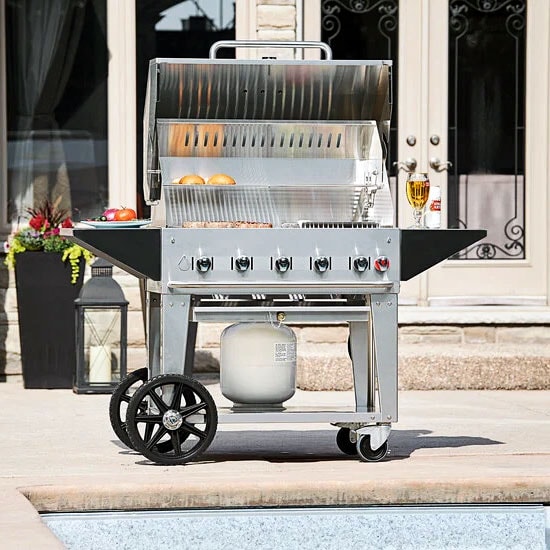
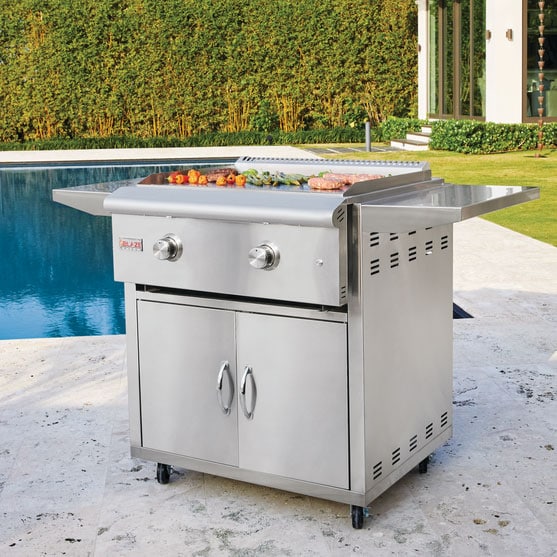
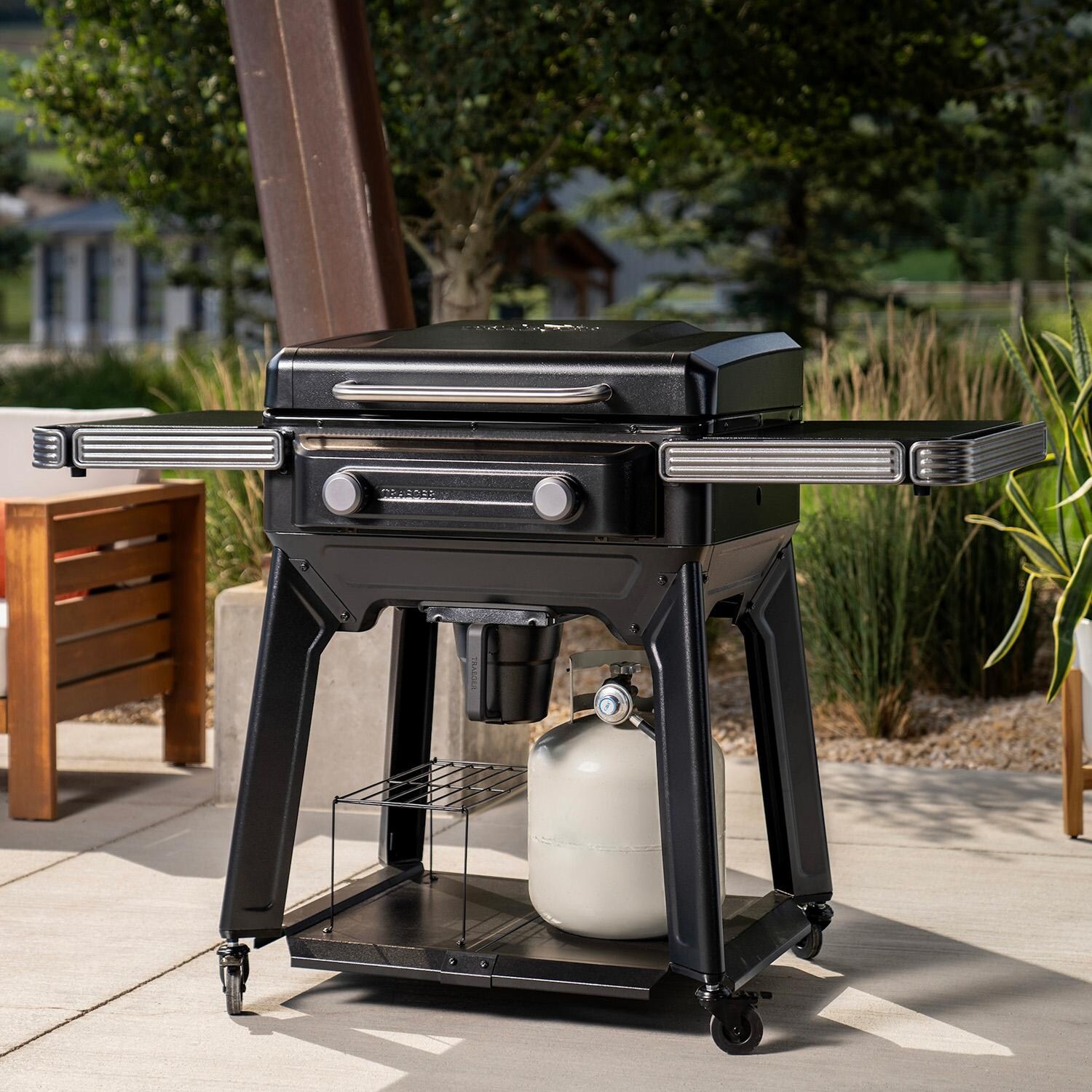
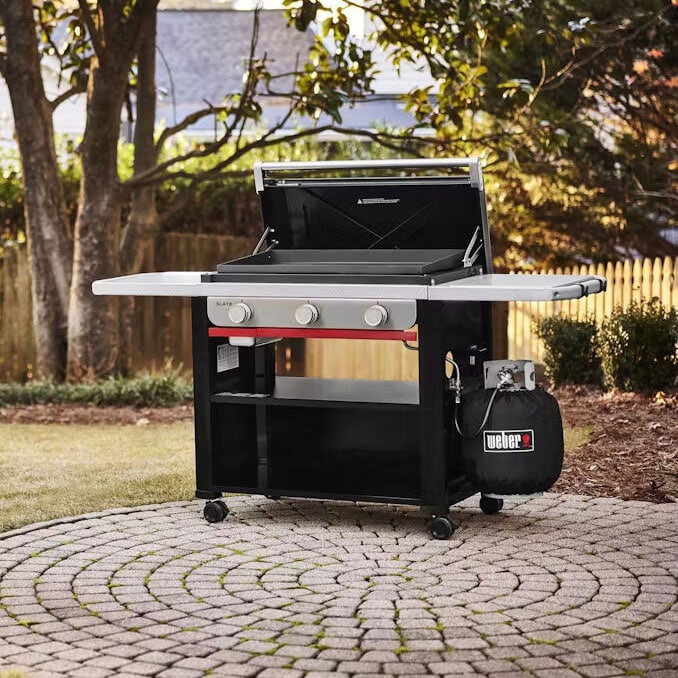
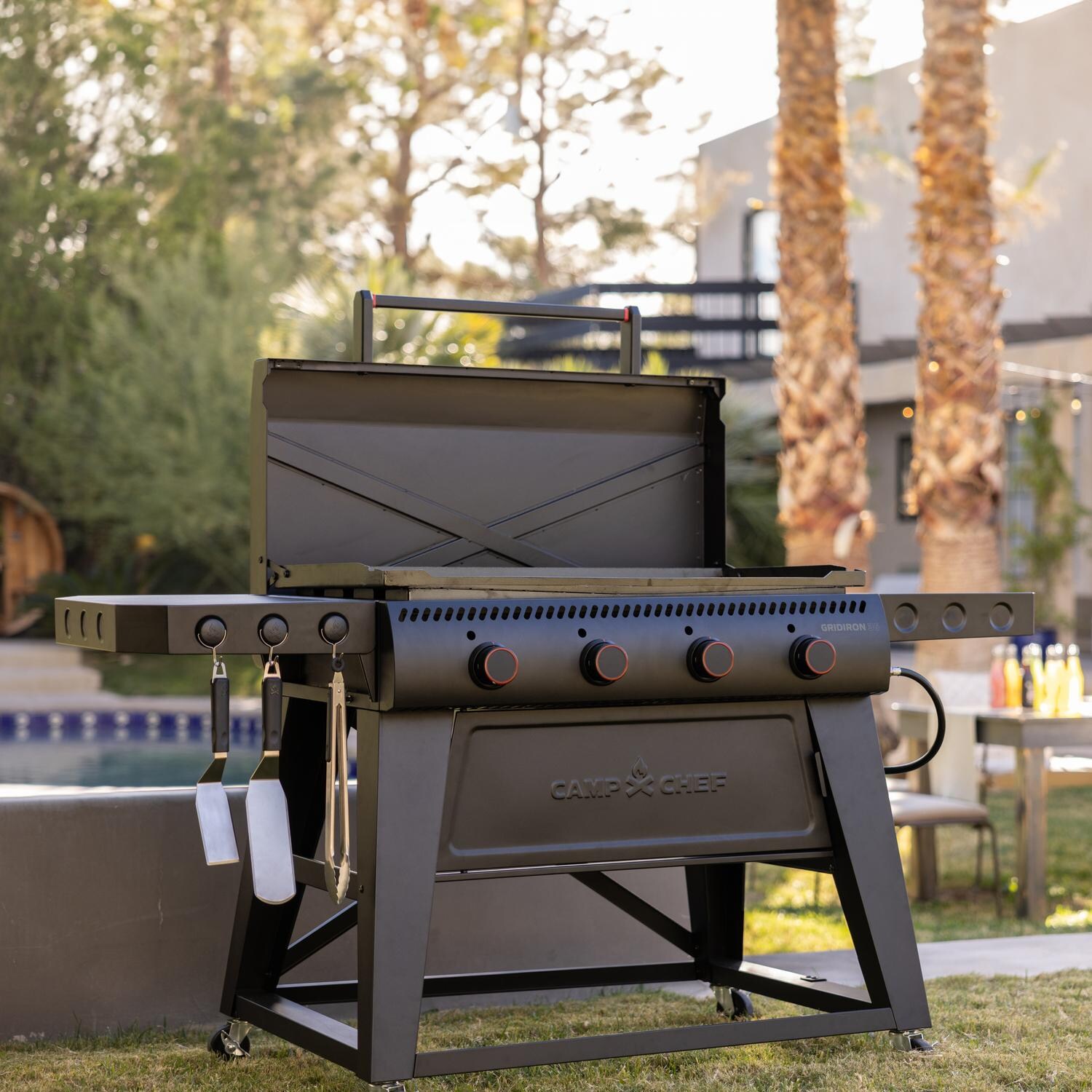
Freestanding Gas Griddles
- Mounted on wheeled carts, allowing for easy portability
- Grill carts contain additional features like accessory rails, side burners and shelves
- Easier to access the griddle from different angles for cleaning and maintenance
- Most use propane as fuel, though certain models can be used with natural gas

)
Top Flat Top Griddle Brands


Which Fuel Type Is Most Convenient for Flat Top Grills?
As with other gas grills, there are two choices of fuel type when it comes to gas griddles: propane and natural gas. There are some practical contrasts that will make one fuel better for you than the other. Things like availability, portability, installation, and refueling are huge considerations in the fuel-type discussion, so let’s take a close look at what separates propane flat top griddles from natural gas models.

Propane Flat Top Grills & Griddles
- The easiest and least expensive option for fueling your grill
- Fueled by standard, 20 lb portable propane tanks
- Safe to connect on your own without needing a professional plumber to install
- 20 lb tanks must be exchanged or filled locally, while a bulk propane tank is refilled by your local propane supplier

Natural Gas Flat Top Grills & Griddles
- Best for those who already have a natural gas line installed
- Must be installed by a licensed plumber
- Freestanding grills are no longer able to be moved around
- No need to refill and you’ll never run out of fuel mid-cook
What Size of Flat Top Grill Do You Need?
The size of your gas griddle is all about how much food you can cook at once. It also plays a role in the number of cooking zones at your disposal and the versatility that arises as a result. The sizes below represent the width of the grill's cooking surface from edge to edge.


)
Flat Top Grill & Griddle Classes
To help you decide which flat-top griddles best fit your needs and lifestyle, the team of BBQGuys experts split our selection into 4 clearly defined classes of varying quality, performance, and features. We call them Luxury, Premium, Practical, and Entry-Level, and they’re your ticket to a simplified shopping journey.


Flat Top Grill Materials & Construction
When buying a Flat Top Gas Griddle, material and construction quality should play a big factor in making your decision. Assessing the flat top grill's overall build, including welds and fastenings, ensures you choose a sturdy, long-lasting gas griddle. For more questions about gas griddle material & construction, check out our Flat Top Grills FAQ.
)
)
Final Things to Consider When Buying a Gas Griddle
After you’ve purchased your griddle, you’ll need to be equipped with the right tools for long-term care and use. See below to find out what can help you get the most out of your flat top gas grill.
Maintaining Gas Griddles & Flat Top Grills
The cooktop is the star of every flat top gas grill, so it deserves a layer of security to block out the elements. That’s the job of griddle lids, which sit over the cooking surface to help them stay sturdy and clean for years of use. Blaze and Twin Eagles flat top grills are among the models that have a cooktop cover included at purchase, so keep that in mind as you’re narrowing down your selections. Above all, griddle surfaces must be kept seasoned to prevent rusting or sticking and to stay in good condition. Burning a high smoke point oil on your surface every so often will keep it seasoned. Meanwhile, a little bit of water and dish soap on a paper towel will suffice for cleaning after each cook.
Flat Top Griddle Accessories
To use your gas griddle to its full potential, you’ll need a handful of griddle accessories to smooth along cooking and improve versatility. For starters, squeeze bottles enable safe oiling of your cooktop, minimizing the risk of burns from spattering liquid, while long-handled spatulas are essential for handling food from a safe distance. Blackstone in particular has a wide range of gas griddle accessories that will step up your grilling in a major way.
We’re particularly fond of melting domes, which not only quickly melt cheese over burgers, but also make it possible to steam food on a flat top grill. You can further expand cooking options with a set of cookware, but make sure it isn’t cast iron! While cookware made from cast iron will eventually scratch steel cooktops, stainless steel cookware will not. Cast iron will also leave flecks of iron on the cooking surface over repeated uses, and those metal deposits can quickly rust and ruin your griddle.

