
)
Fire Pit Safety: Gas, Wood-Burning & What to Avoid
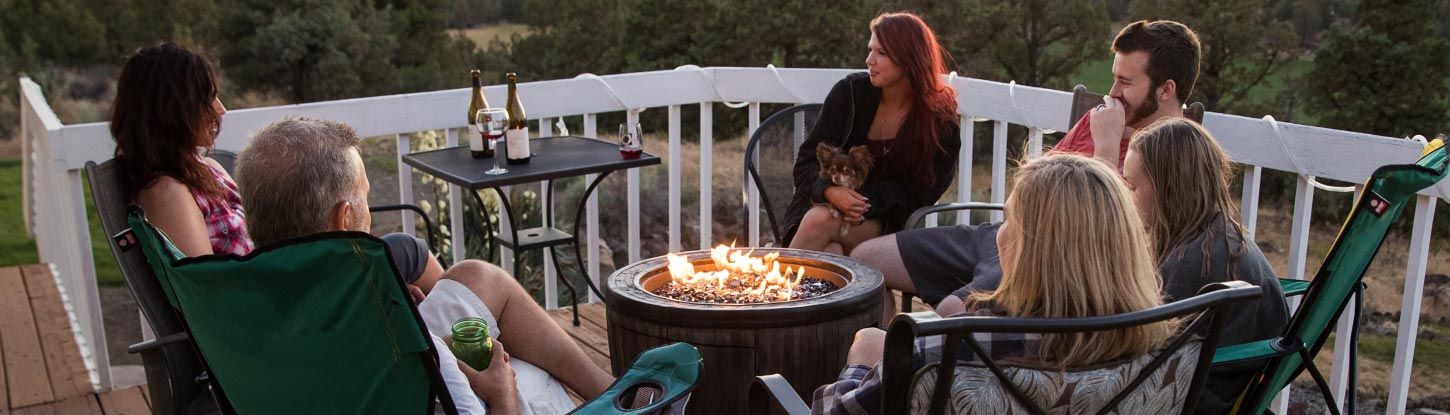
A fire pit turns an ordinary evening outside into something worth lingering for, but an open flame always earns respect. Used carelessly, one can scorch a deck, damage property, or cause serious burns, and some homeowner's policies even require you to declare a fire pit or outdoor fireplace. Used correctly, it's a backyard centerpiece you can enjoy all year long. Our experts put together the essentials below, sorted by fuel type, so you can light up with confidence.
Basic Fire Pit Safety
These basics apply to every fire pit, whatever the fuel.

- Check Fire Codes & Homeowner’s Policy - Before installation check local fire codes and regulations, as well as your homeowner’s policy. This may include restrictions of size and clearances to structures.
- Consider the Location - Install your unit on a non-combustible surface such as concrete, gravel, or bricks and with appropriate proximity from your home. Never install a fire pit under a covered structure.
- Watch Children and Pets - Never leave children or pets unattended near your fire pit. Consider making a designated area for children to play away from the open flame.
- Ignition Items Storage - In addition to storing items like firestarters, matches, and lighters in a secure location away from the fire pit, keep those materials away from children.
- Protect Surfaces - If installing on a wood or synthetic deck, we recommend placing a non-combustible heat-resistant pad or mat under the fire pit to protect the surface. Also be sure to regularly inspect the fire pit for damages and address them promptly.
As a final consideration, be conscious of weather and windy conditions. This is especially true of wood-burning fire pits, which can blow sparks around capable of creating a fire hazard for your home or nearby environment. If your area has a "burn ban," check the details to see if that covers fire pits.
Propane & Natural Gas Fire Pit Safety
Before installing a propane or natural gas fire pit, be sure to read the instructions provided by the manufacturer. Because natural gas fire pits include connection to your main gas line, these models must be installed by a professional.

- Inspect Regularly - Make a habit of examining your hoses and connections for any signs of damage and, if found, replace those parts immediately. In the case of a professional installation, an inspection will be done by that individual.
- Ventilate Properly - Be sure to situate your gas fire pit in a well-ventilated outdoor space. Avoid enclosed or confined spaces to prevent any type of gas buildup.
- Avoid Cooking - As these models are not designed for cooking, avoid placing food or utensils directly on or around the flames. This can be harmful to both you and the fire pit.
- Close Valves - When not in use always be sure to close the gas valve to prevent any accidental release of gas. This will also reduce the risk of leaks.
Don’t forget, there are plenty of accessories for natural gas and propane fire pits that promote safety, products like fire pit lids, wind guards, and propane tank enclosures and covers.
Wood-Burning Fire Pit Safety
A wood-burning fire pit is the closest you can get to a campfire on your patio or in your backyard. If you want an open flame, the sound of crackling embers, intense heat, and the smoky aroma of burning wood, there is no substitute.

- Find a Safe Spot - Place your wood-burning fire pit on a stable, non-flammable surface that is at least 10 feet away from any structures.
- Burn the Right Wood - Be sure to use only seasoned, dry wood, which burns cleaner while producing less smoke. Never burn green wood, construction waste, plywood, or yard waste.
- Seating at a Distance - Make sure to arrange seating a safe distance from the fire to prevent any accidental contact. Also consider seats with heat-resistant materials.
- Keep a Fire Extinguisher Close - Always keep a fire extinguisher and a hose (or bucket of water) nearby to quickly put out the fire in case of an emergency.
- Use the Correct Tools - Invest in the proper tools and accessories to safely use your wood-burning fire pit like a spark screen or a fire pit starter. This also includes fire pit tools to handle wood, tend to the fire, and clean the ashes.
A Serious Word on Pooled-Alcohol & Liquid-Fuel Fire Pits
You may have seen small tabletop fire pits that ask you to pour rubbing alcohol or ethanol into an open bowl and light the pool. We don't recommend them. Neither does the Consumer Product Safety Commission: in a December 2024 alert, the CPSC urged people to stop using and dispose of fire pits that have you pour liquid fuel into an open container and ignite it in place, citing 2 deaths and at least 60 injuries since 2019. These fuels burn at over 1,600°F and can cause third-degree burns in under a second, and refilling near a flame you can barely see can trigger flame jetting, throwing burning liquid onto anyone nearby. If you own one of these open-bowl units, retire it. If you want a liquid-fuel or gel fire feature, choose a unit built to the ASTM F3363-19 safety standard, and never add fuel while it's lit or still hot.
Feeling safer already? We hope so. If used properly, a gas or wood-burning fire pit can be a serious game-changer for your outdoor space, allowing you to enjoy the backyard all year long. If you’re interested in exploring a unit for your space, visit our Fire Pit Buying Guide and if you have any questions at all, don’t hesitate to reach out to one of our home heating experts at 1-877-743-2269.

