
)
How to Choose an Offset Smoker: The Complete Buying Guide
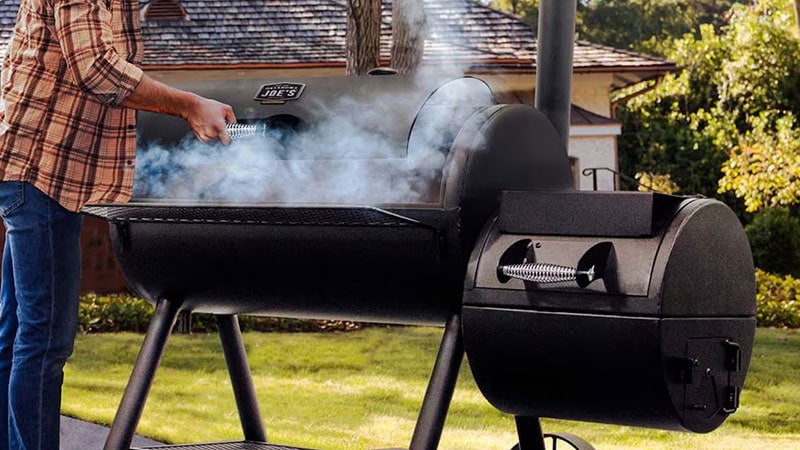
It's the aroma that hits you before anything else. That smell of the split oak catching as the first curl of thin smoke drifts out the stack. It means the cook has started, and it's going to take a while. But, rest assured, hours later you're pulling a brisket with a smoke ring deep enough to make competitive outdoor cooking judges nod in respect.
That's the whole point of an offset smoker. Let's be honest upfront: this is the most hands-on way to smoke meat. No shortcuts, no set-it-and-forget-it. You're tending fire, chasing temperature, learning the rhythm of your particular steel. It's also, without question, the most rewarding. This guide will help you choose the right one and earn every bit of that reward.
Key Takeaways
- An offset smoker burns wood and charcoal in a separate firebox, then pulls heat and smoke across the meat.
- Choose traditional or reverse flow: traditional = heat zones; reverse flow = more even heat.
- Steel gauge and build quality matter—heavy steel holds temperature, and a leaky pit wastes fuel and flavor.
- Match cooking chamber capacity and rack count to how many people you feed.
- Offsets reward hands-on cooks. For “set-it-and-forget-it,” a pellet or electric smoker may fit better.
What Is an Offset Smoker?
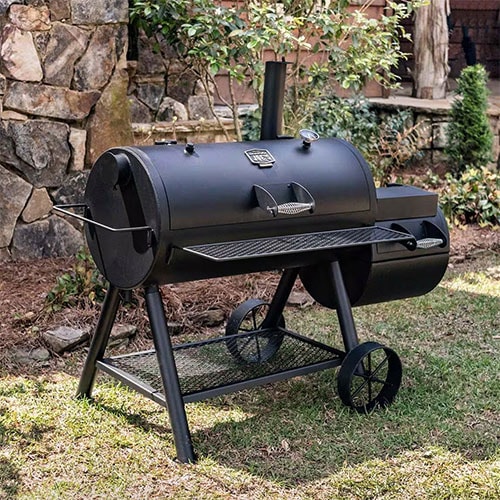
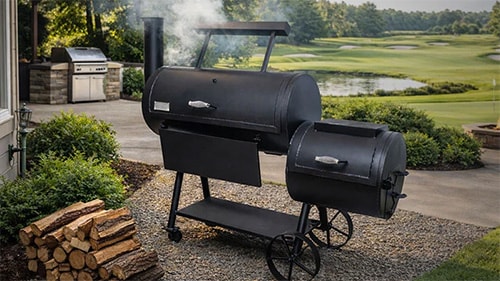
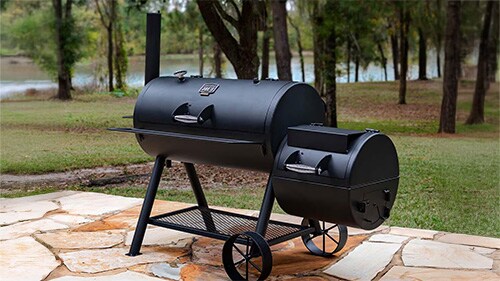
An offset smoker is built around three simple parts: the firebox, the cooking chamber, and the chimney (or stack). Wood or charcoal burns in the firebox, which sits off to one side. Heat and smoke travel through the cooking chamber, where your food rests, then exit through the chimney on the far end.
That offset placement is the whole point. Because the fire lives outside the cooking chamber, food never sits over direct flame—it cooks low and slow in a steady current of heat and smoke instead. This indirect setup is exactly what makes offsets the go-to choice for brisket, pork shoulder, ribs, and beef ribs, cuts that need hours of gentle, even heat to break down properly.
Curious how offsets stack up against pellet grills, kamados, or vertical smokers? Our BBQ Smoker Buying Guide breaks down the full comparison of smoker types and fuels.
Is an Offset Smoker Right for You?
An offset smoker rewards patience, not convenience. If you enjoy tending a fire, dialing in your pit's quirks, and spending a lazy afternoon chasing blue smoke, this is your smoker. If you'd rather set a temperature and walk away, there's no shame in that. Pellet smokers and electric smokers will serve you better. But if the ritual itself is the appeal, nothing else cooks quite like an offset.
| An offset is for you if... | Maybe look elsewhere if... |
|---|---|
| You love the ritual of tending a fire | You want to set a dial and walk away |
| Smoke flavor and bark are the whole point | You mostly cook quick weeknight dinners |
| You've got time for long, slow cooking | You have no patience for a learning curve |
| You want a pit that lasts for decades | You want app control and automation |
Traditional Offset: Heat Zones and Hands-On Control
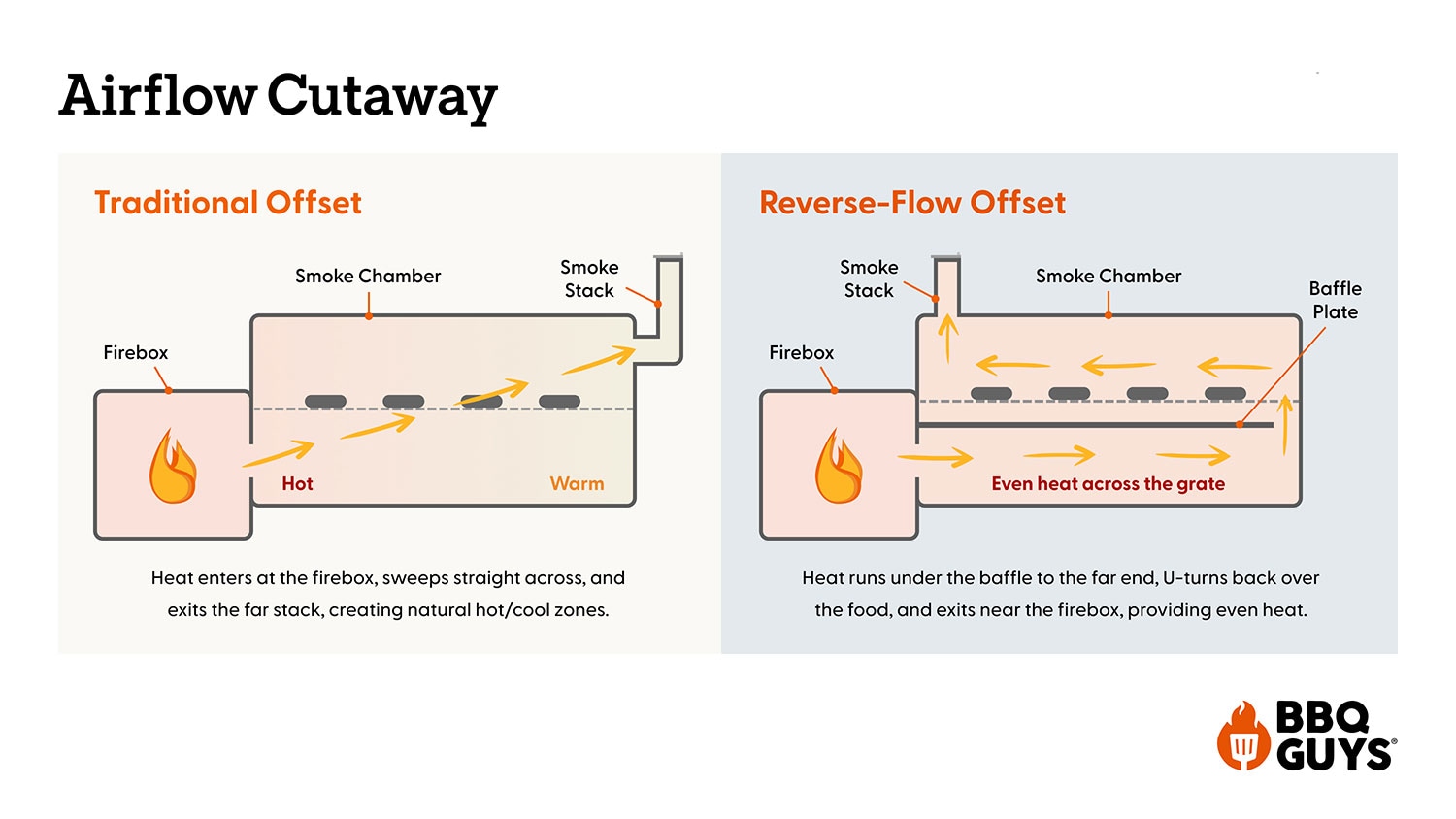
In a traditional offset, heat and smoke enter from the firebox, travel the length of the grate, and exit through a stack at the far end. Because the smoke goes straight across, the firebox side of the cooker runs noticeably hotter than the stack side.
- Use the hotter area near the firebox for searing or crisping, while the cooler stack side is ideal for low-and-slow cooking.
- Traditional offsets require active fire management and may require rotating meat for more even cooking.
- Best for cooks who enjoy tending the fire and want direct control over heat distribution.
Reverse-Flow Offset: Even Heat, Less Babysitting
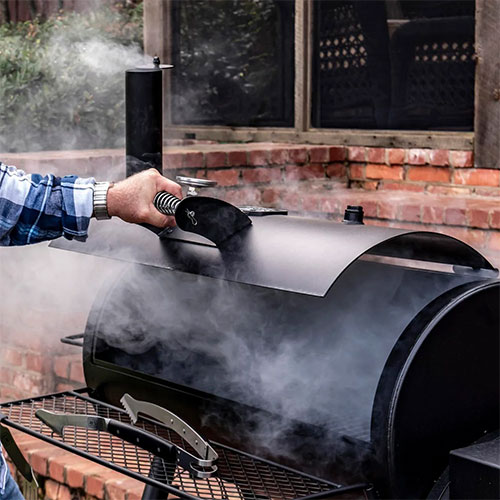
A reverse-flow offset adds a steel baffle plate that runs beneath the grates from the firebox to the far wall. Smoke is channeled under that plate first, then reverses direction and travels back across the food before exiting a chimney mounted near the firebox side. The baffle doubles as a heat sink, smoothing out temperature swings from one end of the chamber to the other.
- The baffle helps create a more consistent cooking environment that holds moisture.
- Reverse-flow offsets provide less temperature variation across the cooking grate.
- Best for cooks loading the grate with the same cut and looking for uniform results with minimal adjustment.
Neither design produces "better" barbecue than the other. The real difference is heat evenness versus zone flexibility, and pitmasters have won championships on both.
Several Oklahoma Joe's models in our lineup, including the Highland and Longhorn, ship with a removable baffle plate and multiple chimney positions to give you the best of both. That means you can run the same smoker as reverse-flow for even heat one weekend, then pull the baffle for traditional zone control the next, giving you two smoker styles in a single purchase.
How Big an Offset Do You Need?
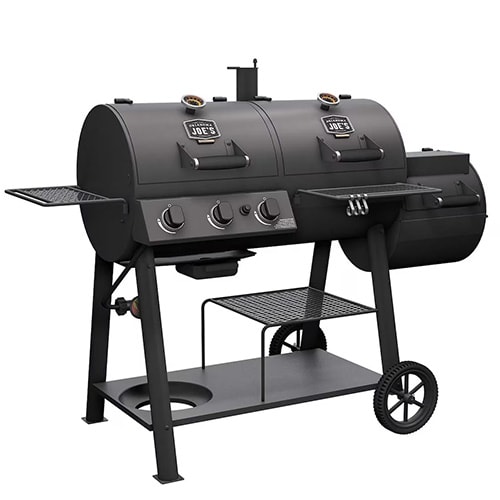
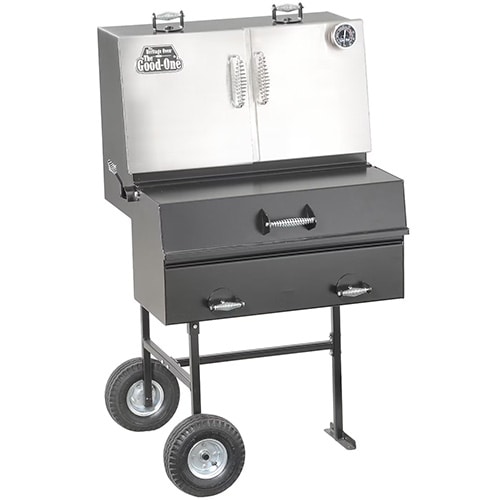
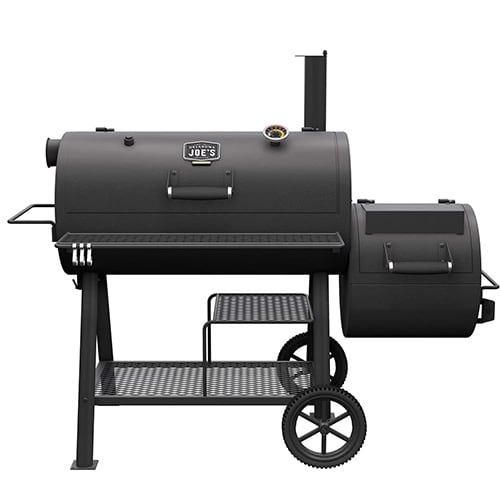
Size matters more than it seems. Go too big and you'll spend hours monitoring a fire just to heat empty space. Match chamber capacity and rack count to how often and how many people you actually cook for. The sizes below refer to the length of the main cooking chamber.
Fuel: Charcoal, Wood, or Both
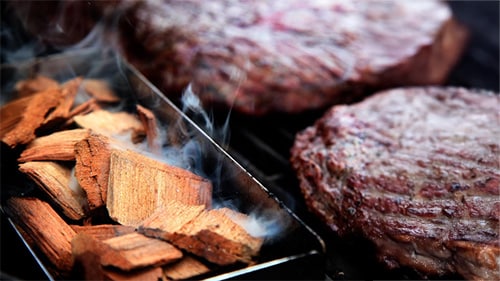
Most offset smokers run on a hybrid approach: charcoal for a stable heat base, plus wood chunks or splits for smoke flavor. Building a solid charcoal bed first gives you consistent temperature control, then adding wood on top produces the smoke that makes offset cooking worth the effort. Some models are charcoal-only, relying on wood entirely for flavor rather than heat.
Wood species matter, too. Oak and hickory bring a stronger, more assertive smoke that pairs well with beef, while fruitwoods like apple and cherry offer a milder sweetness suited to poultry and pork. Stock up on quality wood chunks to experiment with blends.
A handful of combo models also include a propane or gas option, letting you skip the babysitting when you want a faster, lower-maintenance cook.
Freestanding vs. Built-In Offset Smokers
Before comparing brands, settle this configuration question: freestanding or built-in? They both offer the same classic smoking experience, but they fit into your outdoor space very differently. The right choice comes down to how much flexibility you want versus how seamlessly you want your smoker to integrate into a permanent outdoor kitchen.
Freestanding Offset Smokers
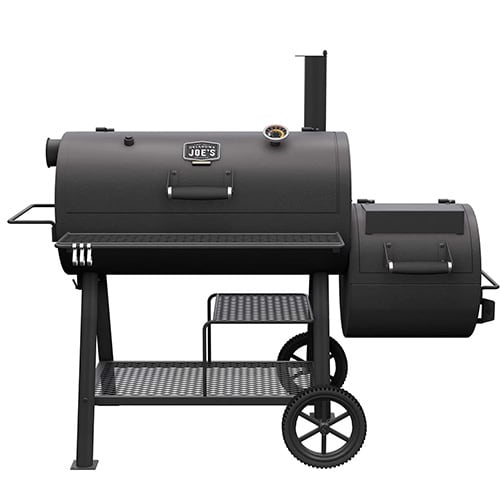
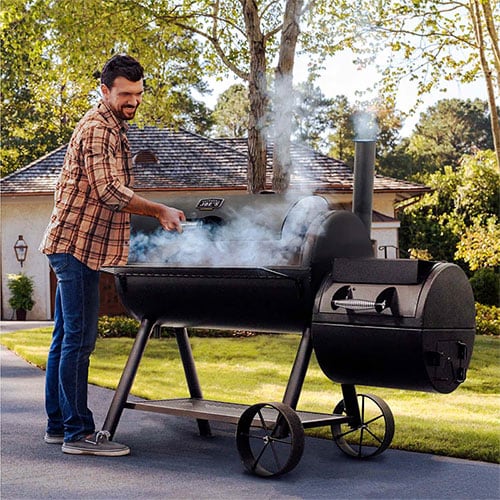
- Freestanding smokers can be moved wherever you need them thanks to their legs or wheels.
- You can roll them into storage during the off-season or when bad weather arrives.
- Moving the smoker makes it easier to clean around and underneath it.
- Best for outdoor spaces that are still evolving or cooks who value portability.
Built-In Offset Smokers
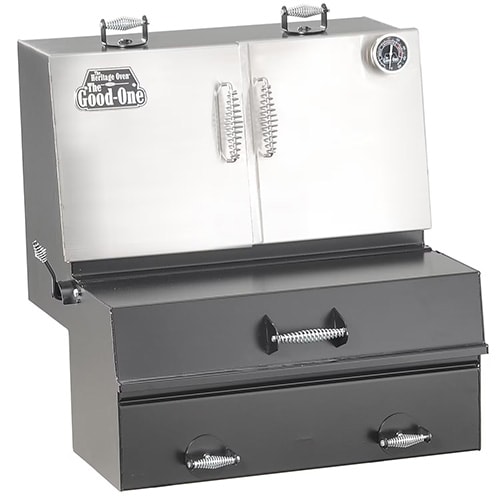
- Built-in smokers become a permanent part of your outdoor kitchen layout.
- They create a polished appearance and anchor the outdoor cooking space.
- Requires proper clearances and a noncombustible housing for proper installation.
- Best for established outdoor kitchens where you want a seamless, permanent setup.
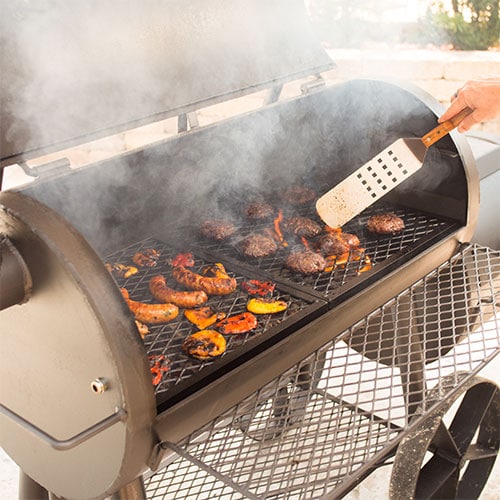
Many offset smokers double as direct grills, using firebox grill plates or a convertible chamber to let you sear steaks and burgers over live fire instead of just low-and-slow smoking. These combo smoke and grill offset smokers do a great job at both weeknight grilling and weekend brisket.
Why Steel Gauge & Build Quality Matter Most
"Steel gauge is the single biggest factor separating a smoker you'll love from one you'll abandon in the garage," says Chris Hurt, BBQGuys Grill Expert.
Thin-steel offsets, the kind stacked cheap at big-box stores, are the number one reason beginners get frustrated and quit. That thin metal heats up fast, cools down faster and swings wildly with every gust of wind or lift of the lid. You'll chase temperature all day and burn through fuel trying to compensate. It's not you; it's the steel.
Heavy-gauge steel changes everything. The best pits use ¼-inch plate that absorbs heat and re-radiates it steadily, so your smoker holds temperature and recovers quickly after you open the door. Pair that with tight-fitting doors, quality gaskets, and a sturdy firebox, and you get a cooking chamber that keeps smoke and heat exactly where they belong, instead of leaking out and taking your patience with it.
You can buy a $150 offset somewhere. We don't sell those because we'd rather you succeed on your first cook than fight your equipment. That's why our lineup starts at a quality floor, not a price floor.
What to Look For Before Buying (Checklist)
Before you buy, run any offset smoker against this list. These are the qualities that separate a pit that holds temperature for years from one that fights you every chance it gets.
-
Steel gauge: This is the spec that matters most. Heavier steel holds heat and recovers faster after you open the door — thin steel just can't compete.
-
Door & seal fit: Tight-fitting doors and quality gaskets keep heat and smoke where they belong, which means less fuel burned chasing temperature swings.
-
Firebox access & size: You should be able to feed the fire mid-cook without a hassle. The firebox also needs to be sized to match the cooking chamber, or you'll never hold steady temps.
-
Dampers & vents: Smooth-operating, rust-resistant intake and stack dampers are your only real temperature controls on a charcoal-fed pit — cheap ones stick and rust fast.
-
Baffle or tuning plates: A reverse-flow baffle spreads heat evenly across the chamber; tuning plates do a similar job on traditional pits, letting you dial in different heat zones.
-
Counterweighted lid: On heavier pits, this is what makes one-hand lid opening painless instead of a workout.
-
Warranty & brand support: A real, honored warranty is a signal the manufacturer expects — and stands behind — a pit that's built to last.
Set Yourself Up for Success
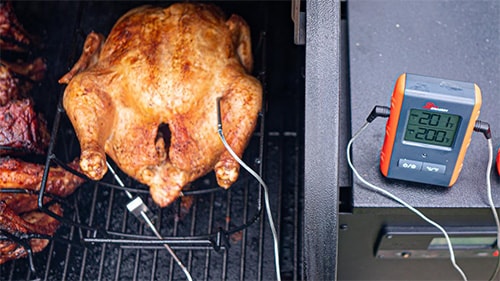
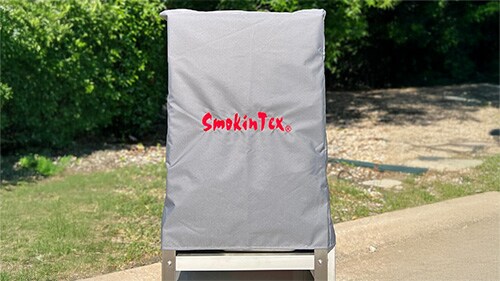
A few smart accessories make those first cooks smoother and keep your smoker running strong for years. Here's what every offset owner should have on hand from day one.
Offset Smoker Frequently Asked Questions
There's something satisfying about the process itself: the early mornings, the patient tending, the smoke curling as it turns brisket,and ribs into something worth the wait. But that payoff depends on choosing the right pit. Match the firebox design, cooking capacity, and build quality to how you actually cook, and every session gets easier.
Every offset smoker in our lineup is tested by our own experts, so you'll never end up with a junk pit. Have questions? Real people are ready to help you choose. Shop all offset smokers, or call us at 1-855-967-1579 to talk to a BBQGuys expert today.

