
)
What Size Grill Do I Need?
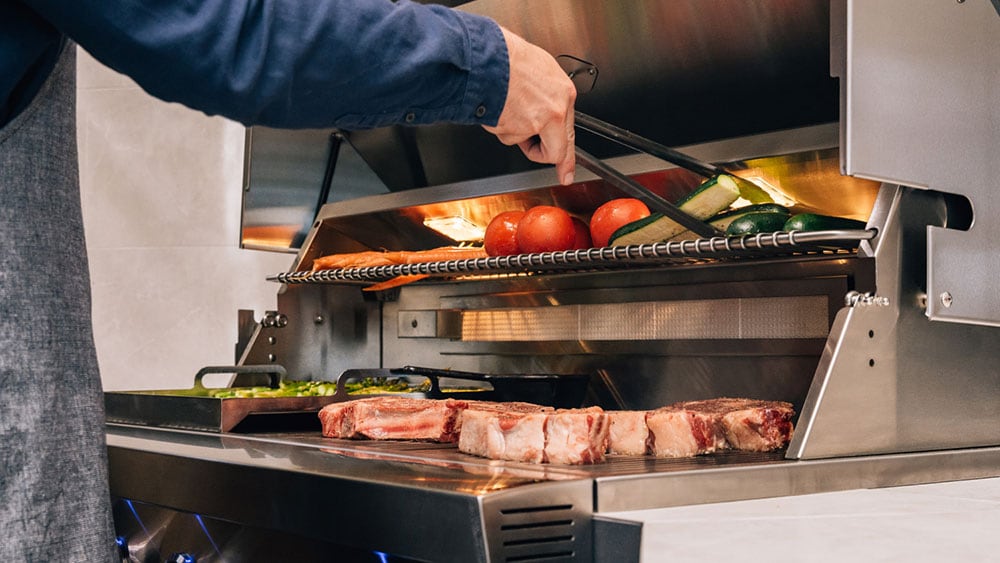
You've decided you want a brand-new grill for your backyard. Whether it's an upgrade or your first foray into outdoor cooking, you're likely bombarded with recommendations as you shop online or in person. Even once you've settled on a type, brand, or price point, one question lingers: what size grill do I need? The truth is the right grill isn't the biggest one available. Instead, it's the one that matches how you actually cook.
The two numbers to consider are cooking area and burner count. Get those right, and everything else—footprint, budget, format—falls into place. We'll walk you through the framework.
Key Takeaways
- Grill size starts with how you cook and who you feed—not the biggest unit on the showroom floor.
- The two numbers that matter most are total cooking area (in square inches) and burner count.
- Built-in and freestanding grills are sized differently: one around your island cutout, the other around your patio footprint.
- Clearances are part of sizing—combustible clearances, counter space, and room to actually work all shape the grill you can fit.
- Right-sizing avoids the two classic regrets: too small to host, or too big to ever fill.
Start With How You Cook
-
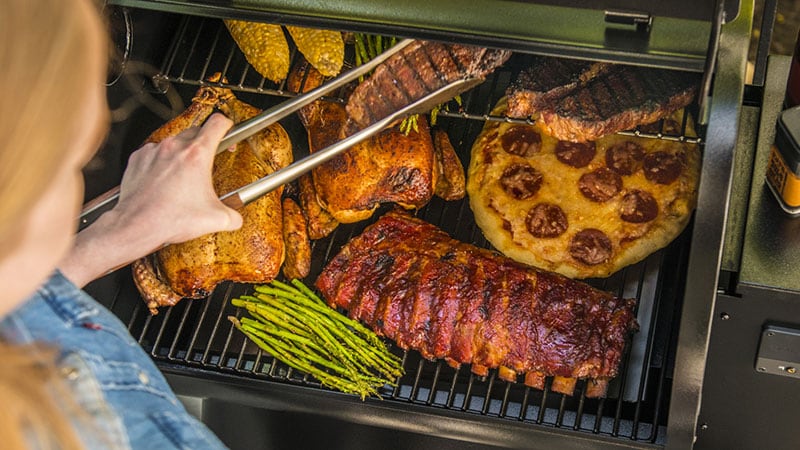
How many people do you usually feed? Think about your typical weeknight, not your once-a-year backyard bash. Sizing around the big day means you're stuck with too much grill for the other 364.
-
How often do you grill? If you're firing it up daily or hosting most weekends, that frequency justifies more grill. But if it's an occasional weekend burger run, you don't need to size up.
-
What do you cook? A quick dinner of chicken and a side needs a lot less surface than a full spread of proteins and veggies, or a low-and-slow brisket that camps out on the grate for hours.
Grill Size by the Numbers
Every grill listing throws out a cooking area number, but not all cooking area is created equal. The primary cooking area—the main grate, where the heat is even and consistent—is the number that matters. Warming racks and secondary tiers do increase the total on paper, but you won't cook a steak on a warming rack. When you're comparing grills, compare primary cooking area, not the combined total.
From there, the math is simple. Plan on roughly 72 square inches of primary cooking space per person for a comfortable fit, or closer to 100 square inches per person if you like elbow room and want to get everything on the grate in one pass instead of cooking in batches. Burner count is a useful shortcut, too, with more burners generally meaning more surface area and finer heat-zone control, so it's worth checking alongside the square-inch number.
| Grill Size | Burners | Primary Cooking Area | Comfortable Feeds | Best For |
|---|---|---|---|---|
| Compact (24–28 in) | 2–3 | ~300–450 square inches | 1–4 | Couples, balconies, small patios |
| Standard (30–36 in) | 3–4 | ~450–650 square inches | 4–8 | Families, regular entertaining |
| Large (38 in+) | 4–6+ | ~650–900+ square inches | 8+ | Frequent hosts, big cooks |
Match the Size to Your Household
Numbers on a chart only mean so much until you see yourself in them. Here's how those tiers translate into real backyards:
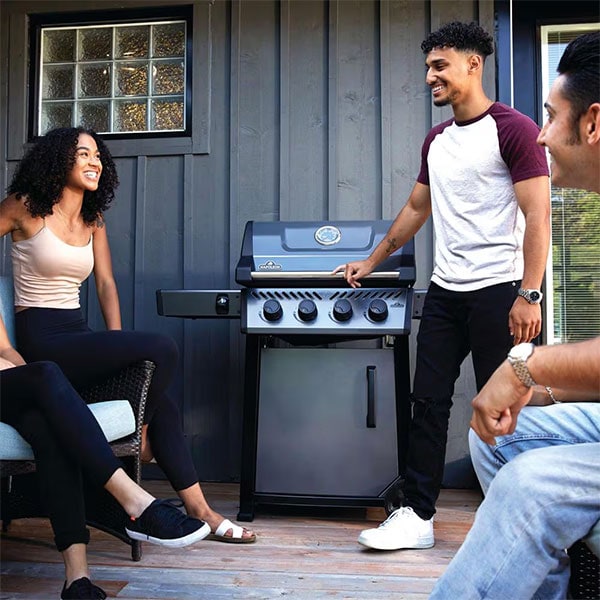
The Couple or Balcony Griller
A compact 2- to 3-burner grill cooks for two with room for the occasional guest; and its compact size won’t crowd small spaces.
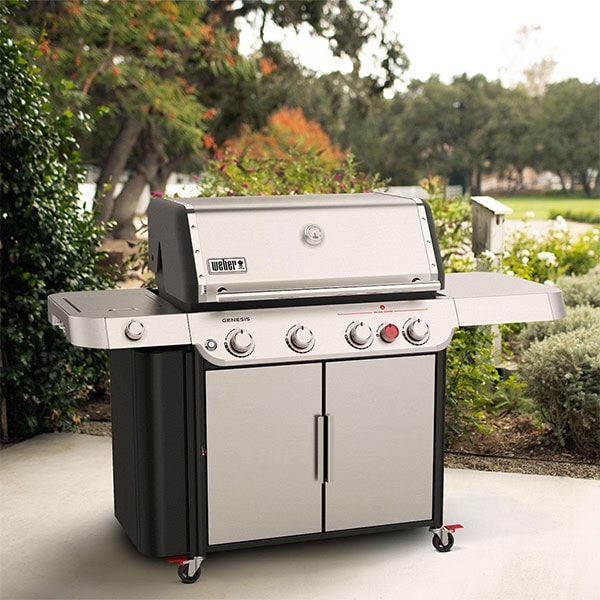
The Family of 4 to 6
A standard 3- to 4-burner grill is the sweet spot with enough room for proteins, sides, and veggies in one go.
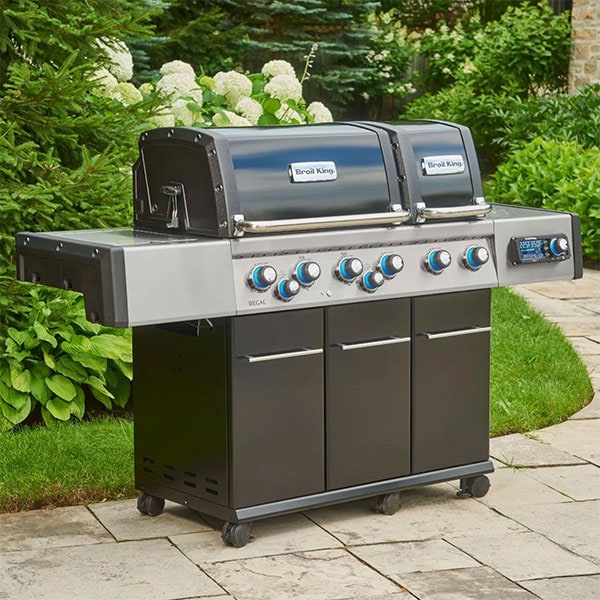
The Host Who Feeds a Crowd
A large 4- to 6-burner grill, often with a dedicated sear or side burner, keeps a party fed without batch-cooking.
Built-In vs. Freestanding: Why Size Works Differently
Here's what most sizing guides skip: a built-in grill and a freestanding grill can share the exact same cooking area and still demand completely different sizing math. A freestanding grill is sized around your patio. A built-in is sized around your outdoor kitchen island. Get the format and the size mixed up, and you'll find out at the worst possible moment, after the cutout is already framed in.
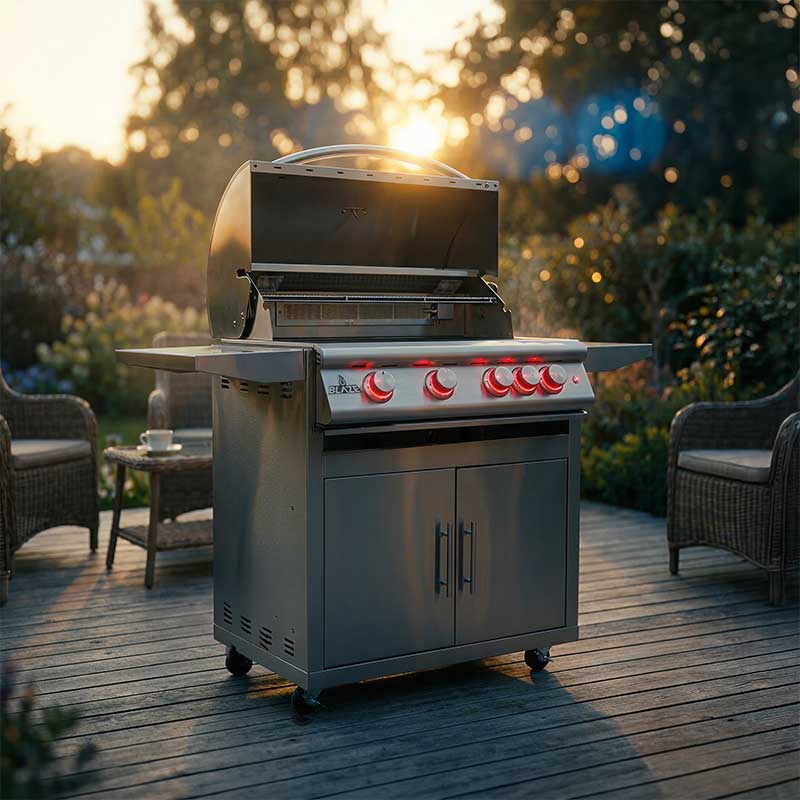
Freestanding Grills: Sizing Around Your Footprint
With a freestanding grill, you're not just sizing the cooking head—you're sizing the whole cart. Folding side shelves can add 12 to 20 inches of width once they're open, and you'll need enough room to lift the hood and walk all the way around the unit.
- Before you buy, measure your actual patio space and make sure there's a clear path to move around it.
- A freestanding grill can roll out of the way when winter hits or follow the shade around your yard in the summer.
- Double-check clearance from the house, any railings, and overhead structures like eaves or pergolas.
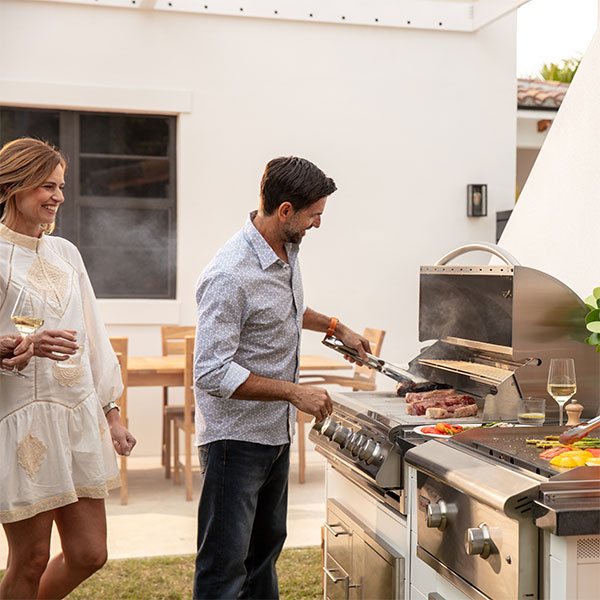
Built-In Grills: Size Around the Cutout
A built-in grill gets sized to a cutout in your island or counter, and that cutout (width, depth, and height) has to match the manufacturer's spec exactly. A 32-inch head from one brand won't necessarily drop into another brand's 32-inch opening, so don't assume they're interchangeable.
- Plan 12 to 18 inches of landing counter on each side for prep and resting plates.
- Confirm the model is rated for built-in installation, with the insulated jacket required anywhere it meets combustible material, and lock in your size before the outdoor kitchen island gets built.
- Retrofitting a larger grill into a finished cutout is expensive or sometimes impossible.
Remember that plenty of models ship in both freestanding and built-in versions at the same head width, so you can choose the format that fits your space without changing the cooking size you land on.
Clearances, Workspace, and Measuring Your Space
The right cooking area doesn't mean much if the grill won't fit where you want to put it. Before you buy, grab a tape measure and check the space, not just the spec sheet.
Start with combustible clearances. Check the owner's manual: many grills need 12 to 24 inches or more of clearance from combustible walls, railings, and overhangs. That number alone can rule out a larger grill in a tight spot.
If you're going built-in, plan landing space on both sides of the head, plus any overhang the island top requires. And on either format, leave room to open the hood all the way and stand comfortably with your tools and a platter in hand, since cramped counters make for clumsy cooking.
Make sure you're measuring in the right places. For a built-in, that's the cutout opening, not your old grill. For a freestanding model, measure the full cart footprint with the side shelves open, since that's the space it actually occupies.
Common Sizing Mistakes to Avoid
Two regrets show up again and again, and they pull in opposite directions.
-
Too small to host. If you regularly cook for a crowd, batch-cooking on an undersized grill gets old fast and then dinner runs late while you wait on the second round.
-
Too big to fill. An oversized grill costs more upfront, burns more fuel heating grate space you're not using, and makes it harder to hold a gentle, steady temperature when you're just cooking for two.
Thankfully, the solution is simple. Instead of buying for the once-a-year party, buy for your typical weeknight. If the big cookout comes around, lean on a side burner or bring in a second cook rather than sizing your everyday grill around a rare event.

