
)
Patio Furniture Materials | Comparison Chart
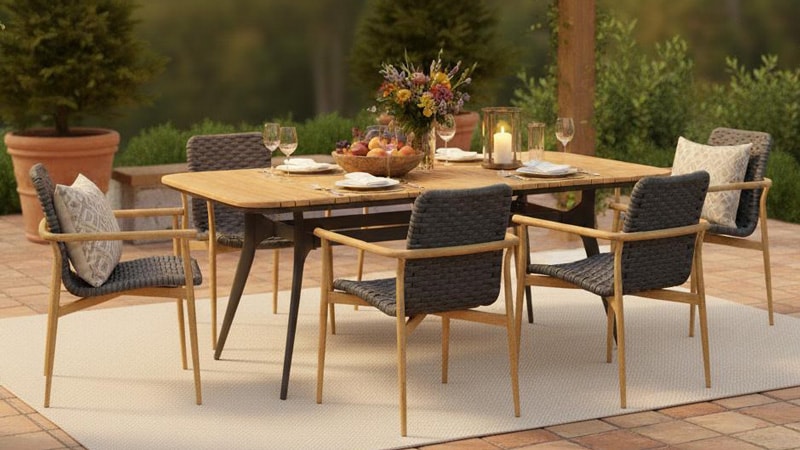
The material you choose for patio furniture affects how well it holds up outside, how much upkeep it needs, and the overall look it brings to your yard. That's why we compared the materials we carry across climate performance, rust and fade resistance, lifespan, weight, and maintenance, so you can find the right fit for your space. A few factors are worth thinking through before you choose. Climate is one, since a covered, inland patio calls for different priorities than a coastal or humid yard. How often you rearrange furniture is another, since lighter pieces are easier to move than furniture meant to stay put. Budget plays a role too, since materials span a range of price points. And style matters, since each material brings its own look to a space. Compare the materials below, then shop the one that's right for you.
| Material |
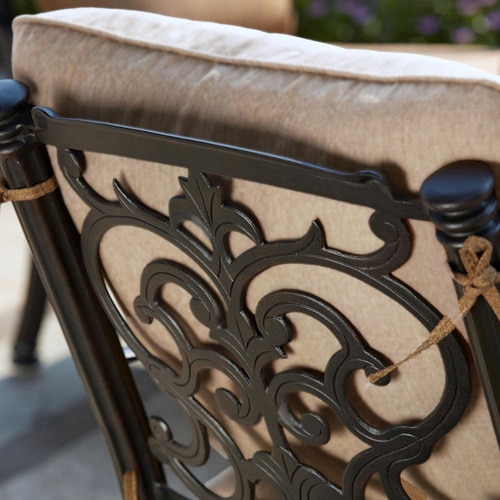 Cast Aluminum / Aluminum
|
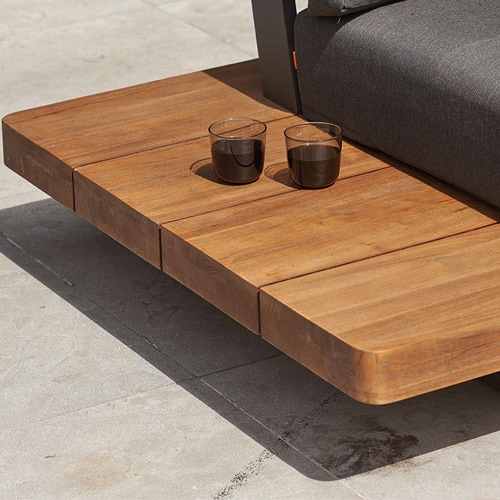 Teak
Teak
|
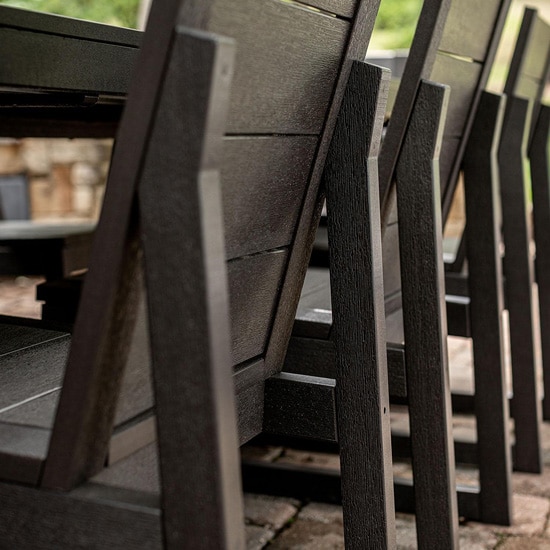 HDPE / Poly
|
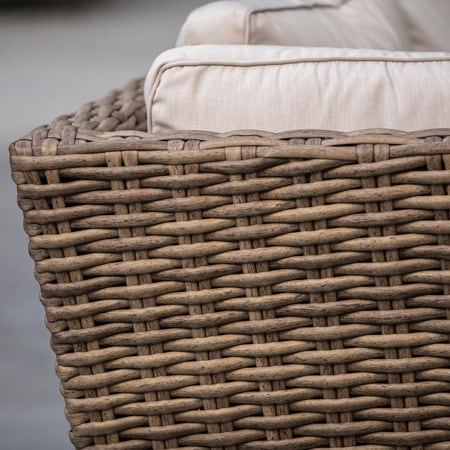 Resin Wicker
|
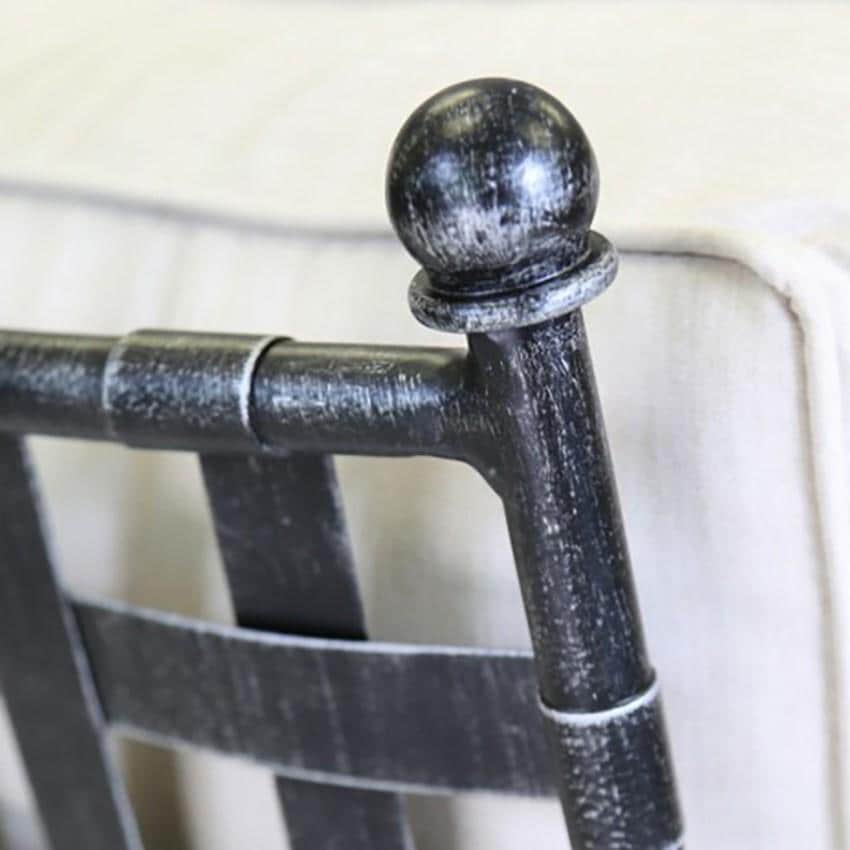 Wrought Iron / Steel
|
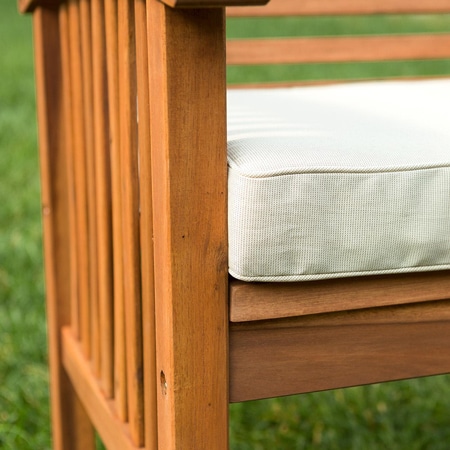 Other Hardwoods
|
|---|---|---|---|---|---|---|
| Style | Clean, versatile styling, from ornate traditional to sleek modern | Natural warmth and a premium, timeless look | Wood-look warmth with a clean, low-fuss edge | Classic woven look with a relaxed, casual feel | Traditional, ornate designs with heirloom-style appeal | Approachable wood-tone look at a more accessible price |
| Price Tier | $$ - $$$ | $$ - $$$ | $ - $$$ | $ - $$$ | $ - $$ | $ - $$ |
| Weather / Climate Suitability | Performs well in humidity and rain; standard finishes can wear faster near salt air | Naturally weather-resistant; holds up well outdoors, including near the coast, with upkeep | Unaffected by rain, humidity, temperature swings, or salt air | Handles moisture, humidity, and salt air well in an all-weather grade | Best suited to covered patios in drier, inland climates, since salt air speeds up wear | Good general weather resistance with routine care; salt air increases upkeep needs |
| Rust / Fade Resistance | Naturally rust-resistant; finish holds color well | No rust risk; color shifts to a silvery patina without regular oiling | Fade resistance depends on UV inhibitors in the material | No rust risk; color holds well in an all-weather grade | Prone to rust if the finish is chipped or scratched | No rust risk; may fade or grey without periodic sealing |
| Durability / Lifespan | Holds up well over time, but extruded aluminum can dent or bend under heavy stress | Exceptionally long lifespan, often decades outdoors | Long lifespan with minimal wear over time | Durable weave that holds up over many seasons | Sturdy and long-lasting when the finish is maintained | Solid lifespan with regular sealing or oiling |
| Weight / Portability | Extruded aluminum is lightweight and easy to rearrange; cast aluminum is heavier and more substantial | Moderate to heavy, depending on the piece | Heavier pieces, stable but less portable | Light to moderate, simple to move | Heavy, stays put in wind and harder to move | Moderate to heavy, depending on the piece |
| Maintenance Required | Low. Occasional cleaning with soap and water | Medium. Oil or seal periodically to maintain color, or let it patina naturally | Low. Soap and water as needed | Low. Wipe down regularly; avoid harsh chemicals | High. Inspect regularly for chips; touch up finish as needed | Medium. Regular sealing or oiling recommended to maintain appearance |
| What to Watch For | Lighter pieces may need anchoring in high wind | Color will shift to silver-grey without regular oiling, a natural process rather than a defect | Darker colors can run warmer in direct sun, but UV inhibitors will help keep them cool | Confirm "all-weather" grade, since lower-grade wicker can become brittle over time | Finish damage (chips, scratches) can lead to rust if not addressed | Without sealing, color and grain can fade or grey faster than teak |
| Shop Patio Furniture | Shop Cast Aluminum / Aluminum | Shop Teak | Shop HDPE / Poly | Shop Resin Wicker | Shop Wrought Iron / Steel | Shop Other Hardwoods |

