
)
How to Buy a Fire Pit | Fire Pit Buying Guide

Key Takeaways
- Choose wood, gas, or pellet fire pits based on the vibe and convenience you want
- Smokeless fire pits use secondary combustion to burn hotter with far less smoke
- Styles range from traditional pits and bowls to fire tables and portable options
- Materials like cast aluminum and faux stone affect durability and weather resistance
- Consider ignition type (spark, continuous, or match light) for ease of use
Fire Pit Fuel Types
Wood and gas are the standard and most popular choices for fire pits, though a few specialty options have surfaced in recent years.

Wood
The old-fashioned, smoky aroma and pleasant crackle of a wood fire creates an ambiance that can’t be beaten, and the benefits of quick installation and minimal maintenance make these a popular choice. Traditional log fire pits are the least expensive option and produce larger, hotter fires than their gas counterparts.

Gas
As opposed to wood, gas fire pits require less work. Since there’s no chopping wood and no matches, starting a fire can be as simple as turning on the gas valve and pushing a button. Propane models attach to a standard 20-pound propane tank that will need to be placed somewhere on your patio. Some units are built to house the tank within its structure while other brands carry a separate matching tank cover. Natural gas has the advantage of a cleaner installation since there is no tank to place, but it will require professional plumbing to run the natural gas line to your fire pit.

Pellet
Pellets give you that wood-fired experience without the hassle of logs. They light easily and burn more predictably than firewood, holding a steady flame with minimal mess, so you get the crackle and warmth of a real fire with less tending and cleanup. Most pellet models are compact and easy to move, making them a simple way to add fire to a patio, deck, or campsite.
Smokeless Fire Pits
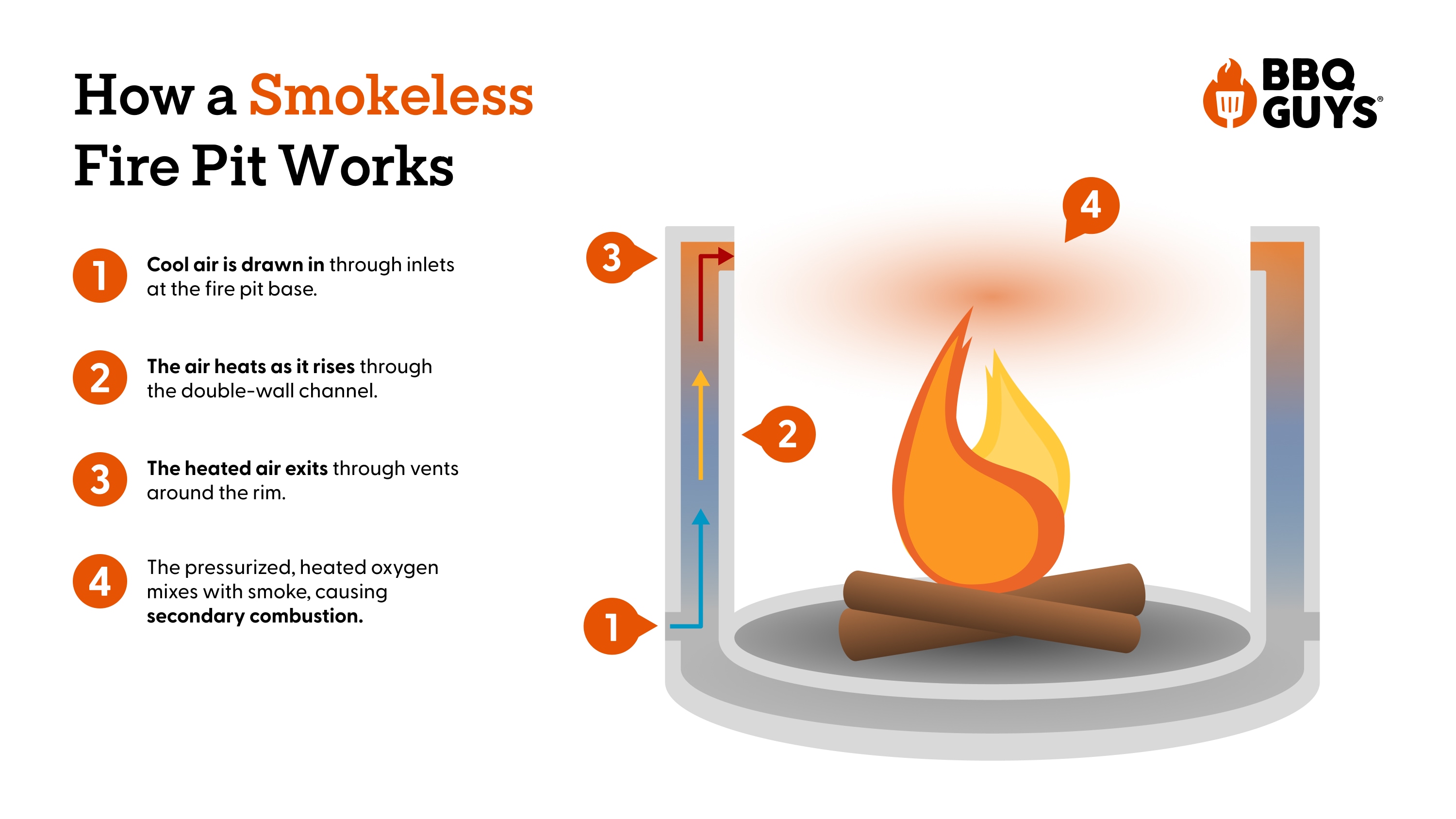
Smokeless fire pits use double-walled construction to channel and preheat air as the fire burns. That heated air feeds back into the fire through vents near the top, igniting the smoke and gases an ordinary fire would simply release in a process called secondary combustion. The result is a hotter, more complete burn that turns wood or charcoal almost entirely to ash, with far less smoke drifting into your face or clinging to your clothes.

Minimal Smoke
Specially designed air flow technology helps logs burn completely and greatly minimizes smoke.

Easy to Clean
The absence of smoke and minimal ash left behind make this a breeze to clean.

Take It Anywhere
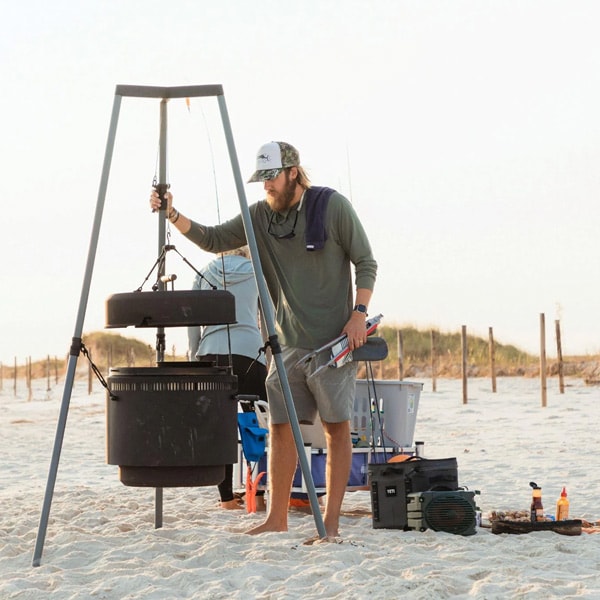
Lightweight and portable designs mean you can take it on the road or enjoy it at home.
Fire Pit Types, Sizes, and Styles
Each fire pit style lends a different aesthetic to your outdoor space, and some have the added benefit of being practical even when not in use.




Fire Pit Materials
The material of your fire pit will make a big difference in terms of longevity, maintenance, and overall cost. BBQGuys® offers more than 20 different types of materials to choose from, so let’s take a look at some of the most popular choices available.
)
Powder-Coated Steel
Powder-coated steel is steel that has been coated with a layer of powdered paint. It's a popular method for adding color and protection to metal surfaces, providing durability and resistance to corrosion. It's a budget-friendly option, though it may have a shorter lifespan compared to more robust materials.
)
)
)
GFRC
Glass Fiber Reinforced Concrete is composed of specially formulated cement, glass fibers, aggregates, and polymers, and uses special alkaline resistant glass fibers and polymers instead of steel for reinforcement. This creates a final product that is thin and hollow in construction, so it weighs a fraction of a traditional pre-cast concrete fire pit.
Ignition Type
The ignition type is what is used to light the burner on a gas fire pit. Different methods are more popular than others, so it’s important to know the difference when making your choice.


Fire Pit Safety
A fire pit is only relaxing when it’s set up safely. Always read the owner’s manual for your specific model, set the pit on a non-combustible surface with proper clearance to nearby structures, and never burn under a covered space. For the full rundown of gas, wood, and general protocols, see our Fire Pit Safety Guide.
Fire Pit Warranties
Fire pits can last an exceptionally long time when properly cared for, but even the best fire pits have the occasional issue. Check out our Fire Pit Warranty Comparison Chart for more information on what warranties our fire pit brands offer.
Gas Fire Pit Decor
Don’t forget the finishing touches! Fire pit décor refers to anything you can put inside the pit, as well as ornamentation usually placed on top of or used with filler. It’s a great way to add some extra pizzazz to your gas fire pit. Choose one or mix and match for a truly unique look. Types of décors include fire glass, geometric shapes, stone branches, or shaped glass to help you create beautiful and diverse firescapes. Check out our Fire Glass Buying Guide for more information.
DIY Fire Pits
For a fire pit that’s truly unique to your taste and your space, getting a DIY fire pit kit is a great option. You have the advantage of making it any size you want, and you can customize your materials to match your patio. Our article on How to Build a Gas Fire Pit will go into more detail about what you’ll need for your journey.
Whether you're roasting marshmallows over a wood-burning fire, or simply enjoying each other's company, any fire pit you choose will serve as a welcoming gathering place for your backyard. For more information about adding a fire pit to your space, give our experts a call at 1-877-743-2269. We have over 20 years of experience in outdoor heating to answer all your questions.

