
)
How to Clean & Maintain a Gas Griddle
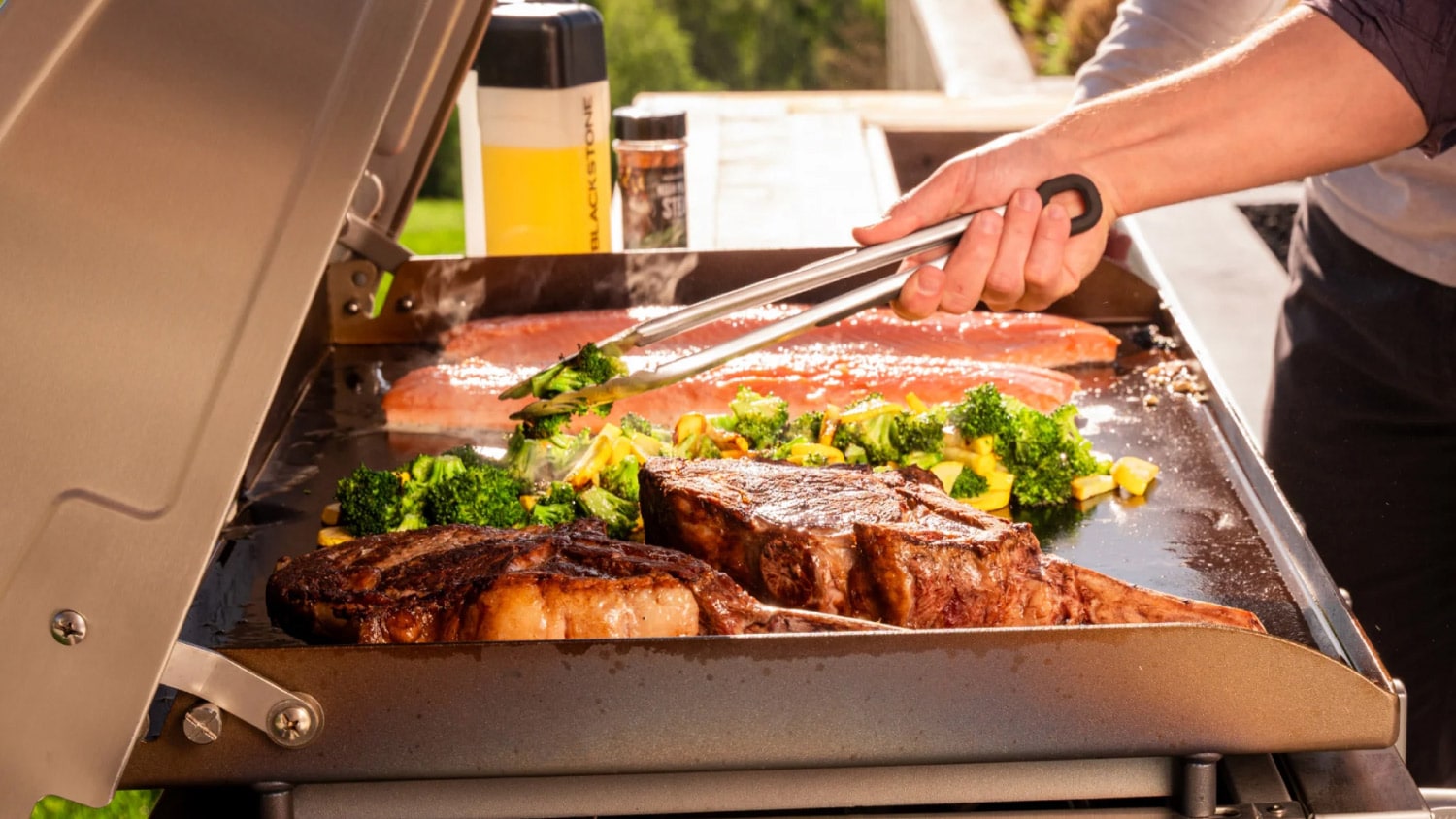
It doesn’t take long for a griddle to go from pristine clean to a complete mess. Cooking smashed burgers, fried rice, pancakes, and everything in between, leads to a buildup of grease, food bits, and residue. Whether you call it a flat-top grill, teppanyaki grill, or plancha, the open surface is designed for high-heat, high-contact cooking, which means it’s going to look used after each meal.
But don’t panic. Keeping a clean gas griddle that consistently operates at a high level is surprisingly straightforward. With a simple routine after each cook, combined with the occasional deep clean, you can protect your griddle’s surface, prevent rust, and maintain that smooth, nonstick feel.
What You’ll Need
No complicated tools are required for cleaning and, even better, there is no need to incur any professional upkeep costs. Just make sure you have these on hand:
- Griddle scraper or spatula
- Grill brush or scrub pad (non-wire for coated surfaces)
- Paper towels or cloth
- High-smoke-point oil (canola, avocado, flaxseed)
- Warm water
- Mild dish soap (for the occasional deep clean only)

How to Clean Your Gas Griddle After Each Use
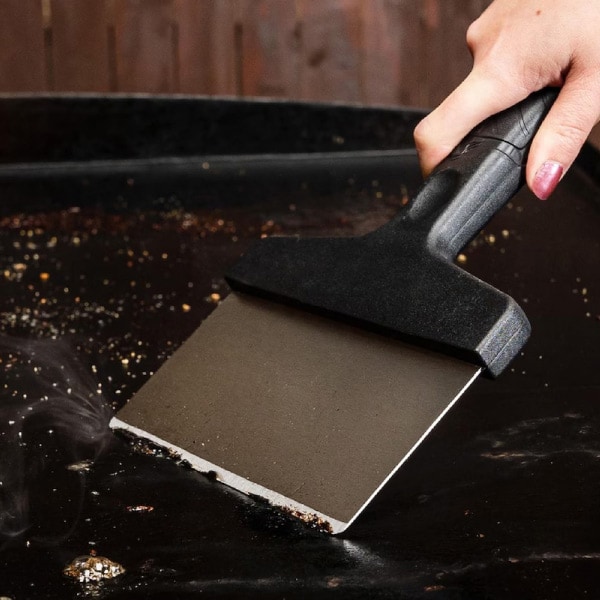
1. Clean while it's Warm
- Turn the burners down to low heat
- While surface is still warm (not hot), use scrapper or spatula to push debris and grease into trap
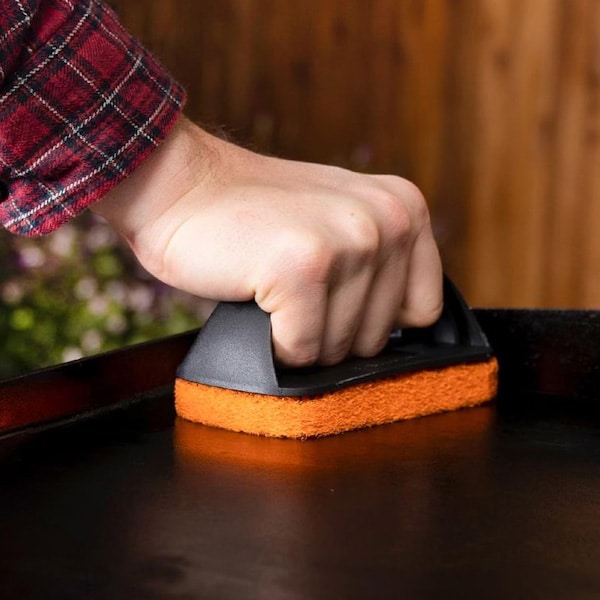
2. Steam to Loosen Residue
- Add a small amount of water directly onto the cooking surface
- Let it bubble and steam for a few seconds
- Scrape again to remove any remaining bits
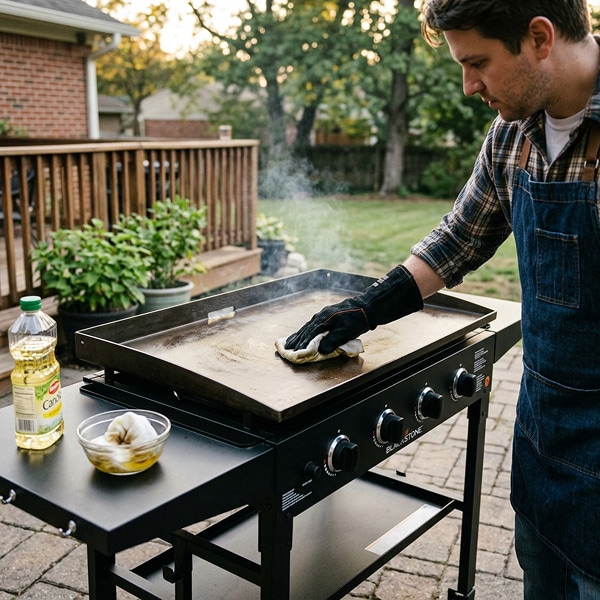
3. Wipe It Down
- Use paper towels or a cloth to wipe the surface clean
- Apply a light coat of high-smoke-point oil before shutting down
Cleaning while warm is key as debris lifts easily and you’re not fighting stuck-on residue later. The quick steam helps to break down stubborn grease without needing harsh chemicals. And that final oil layer protects the surface and keeps your griddle seasoned and ready to go.
Important:
Avoid using soap during your regular cleaning routine, especially on seasoned steel griddles (like many Blackstone models). Soap can strip away the seasoning layer, which is what gives your griddle its natural nonstick performance and protection against rust.
How to Deep Clean a Flat-Top Grill
If you’re unsure how to tell if your griddle needs a deep clean, there are a few tell-tale signs. Those include:
- Visible buildup on flat top
- Sticky cooking surface
- Uneven cooking results
- Noticeable rust spots
Here’s how to reset your cooking surface and restore consistent performance:
- Heat the griddle slightly to loosen residue, then turn it off
- Scrape and gently scrub the surface to remove buildup
- Use a small amount of mild soap, but only if needed
- Rinse with minimal water and wipe clean
- Dry thoroughly to prevent rust
- Apply thin coat of oil and re-season immediately to protect surface
How to Season a Gas Griddle
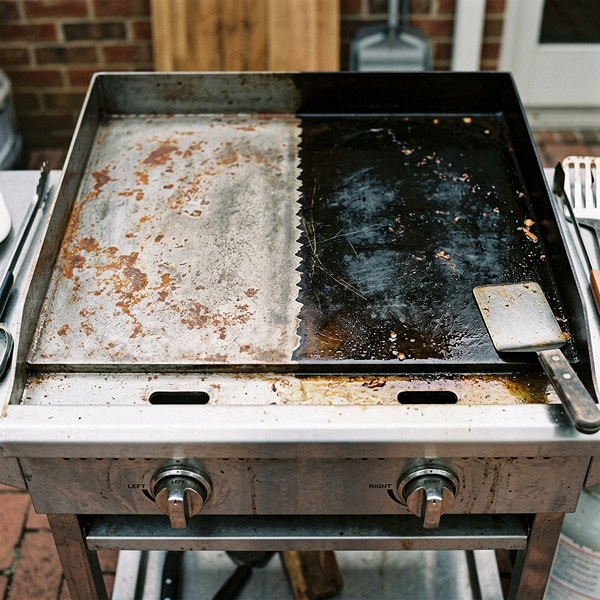
Want to give your griddle that nonstick performance you’ve always dreamed of? It’s all in the seasoning, a process of heating a thin layer of oil until it bonds to the metal surface, creating a durable, protective coating.
This layer is what gives your griddle that natural nonstick feeling while also helping prevent rust over time. When done correctly, it makes cooking easier and keeps your griddle in tip-top shape (and with minimal effort).
Here’s how to season a griddle:
- Clean the surface completely and make sure it’s dry
- Heat the griddle until it’s hot
- Apply a very thin, even coat of high-smoke-point oil
- Let the oil heat until it begins to smoke
- Turn off heat or let it burn off
- Repeat process 2 to 3 times
How-To Guide
Preventing Rust and Long-Term Maintenance
- Always Dry Completely —
Moisture can ruin a seasoned surface, so after cleaning, let the griddle run on low heat to evaporate any remaining water. - Lightly Coat After Each Use —
Apply a thin layer of high-smoke-point oil while surface is still warm to reinforce seasoning and prevent rust. - Invest in a Cover —
A well-fitted cover protects your griddle from weather, debris, and humidity, helping extend its lifespan. - Store Properly in Humid Climates —
In humid areas, store your griddle in a covered space and minimize overnight exposure to moisture to reduce the risk of rust. - Check Grease Trap After Each Use —
Regularly emptying and wiping the grease trap prevents buildup, odors, and flare-ups while keeping cleanup easy.
Common Gas Griddle Cleaning Mistakes
You’d be surprised how even simple cleaning routines can go wrong. Here are a handful of common mistakes to avoid to keep your gas griddle performing like new.
- Using Too Much Water — Excess water can warp the surface or lead to rust, especially if not fully dried.
- Using Harsh Chemicals — Strong cleaners can strip the season layer and damage the surface over time.
- Letting Grease Build Up — Built-up grease turns sticky, affects flavor, and makes future cleaning harder.
- Skipping Seasoning — Without a protective oil layer, surface is more prone to sticking and corrosion.
- Using Metal Tools — Metal can scratch coated griddles, reducing nonstick performance and durability.
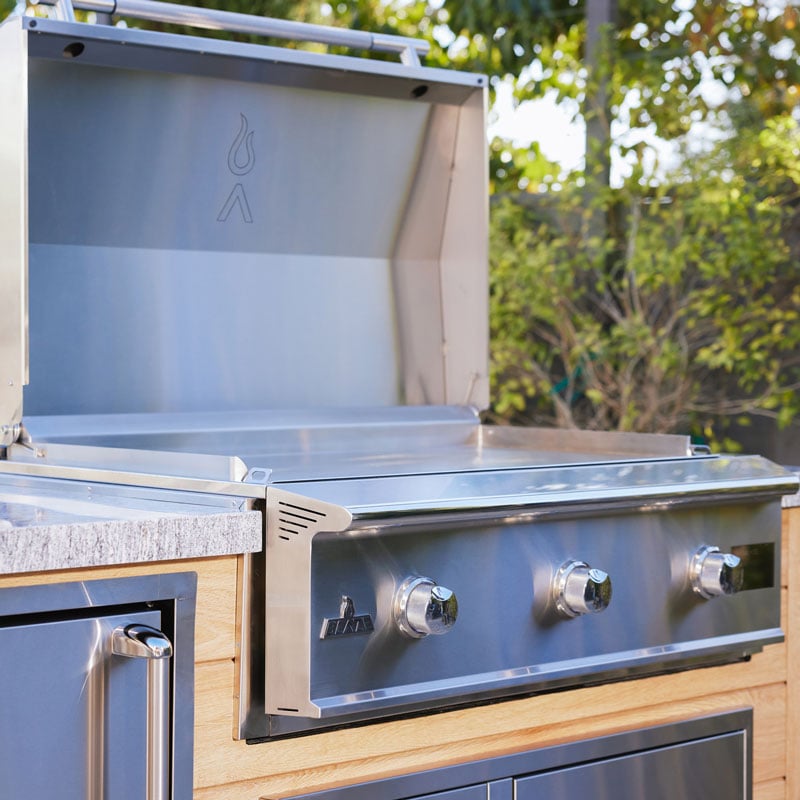
Keeping a clean gas griddle is quick and simple, and key to getting consistent, long-lasting performance every time you fire up. With just a few easy gas griddle maintenance habits after each use, you’ll protect the surface, prevent rust, and keep food cooking exactly the way it should.
Looking for the right tools to keep your griddle operating at its best? Browse our selection of griddle covers and cleaning accessories.


