
)
Should the Grill Lid Be Open or Closed?
“If you’re looking, you aren’t cooking” is one of the most popular BBQ sayings around, but it’s not always true. Whether you should leave the lid open or closed while grilling depends entirely on what you’re cooking and what kind of heat you’re trying to achieve. Different foods benefit from different cooking methods, and your grill works differently depending on the fuel type and how you use it. Knowing when to grill with the lid open or closed can help you cook food more evenly, develop better flavor, and avoid overcooking or flare-ups.
When to Grill with the Lid Open

When you need high levels of heat, it’s best to cook with the grill lid open. Opening the lid allows for maximum airflow and oxygen, which means a hotter flame. Grilling with the lid open also allows you to manage flare-ups and cook one side of your food at a time as you see fit. Steaks are among the most common food that’s grilled entirely with the lid open, as they benefit from searing over intense heat. Thinner pieces of chicken and fish are also best suited for searing with the lid open. For most infrared grills or grill burners using IR heat, you will want to leave the grill lid open throughout your cook.
When to Grill with the Lid Closed

A closed lid traps hot air and creates convection within the grill body, allowing you to cook at lower temperatures and take advantage of indirect grilling. In addition to circulating hot air all around your food, grills with the lid down also produce more moisture in the form of drippings that vaporize and coat your food in flavorful smoke. You want to grill with the lid down when you’re using indirect heat on items like bone-in chicken breasts, or slow-cooking something huge like a brisket that needs long exposure to low heat so it can reach doneness without a completely charred exterior.
There are some occasions when it’s acceptable to grill food with the lid open for a little while then move it to an indirect heat setup with the lid closed, and vice versa. You may want to quickly sear a piece of meat before letting convection heat work its magic, or try the reverse-searing technique to lock in juices and flavor. Burgers are the most notable food that usually gets both treatments.
While these are good general guidelines of grilling, the type of grill you are using also plays a role in how you should use the lid. Kamado grills can produce very high heat for searing even with the lid closed. Charcoal grills use air vents in the body and grill lid to control airflow and temperature. Some pellet grills offer a high-heat sear function for searing directly above the fire pot.
Gas Grills
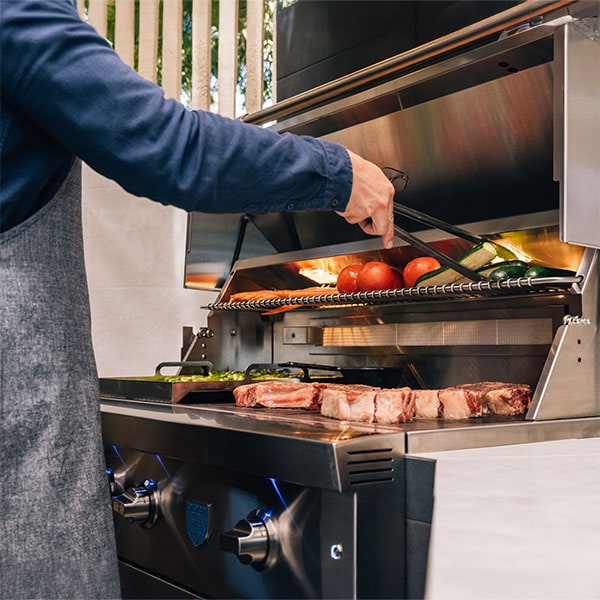
Gas grills heat quickly and maintain a steady temperature, making them versatile for both lid-open and lid-closed cooking.
- Cooking burgers, hot dogs, sausages, seafood or thin cuts of meat
- Searing foods directly over high heat
- Flipping or moving food frequently
- Cooking thick steaks, pork chops, chicken breasts or bone-in chicken
- Roasting foods such as vegetables or larger cuts of meat
- Using indirect heat setups with multiple burners
Charcoal Grills
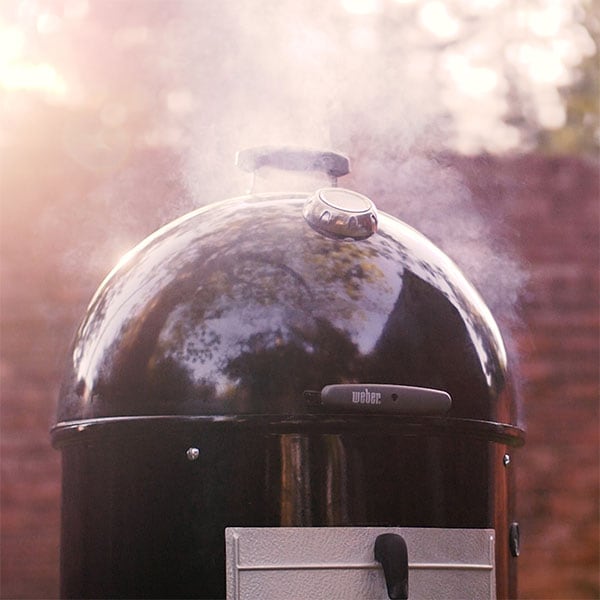
Charcoal grills can create very high direct heat and also excel at indirect cooking. Lid position affects airflow, which controls the fire’s intensity.
- Searing thin steaks, burgers, or vegetables directly over hot coals
- Cooking foods that need attention to avoid burning
- When you want maximum direct heat exposure for a quick char
- Cooking thicker cuts that need time to cook through
- Using an indirect charcoal setup with coal placement or heat deflectors
- Stablizing or maintaining a specific cooking temperature
Pellet Grills
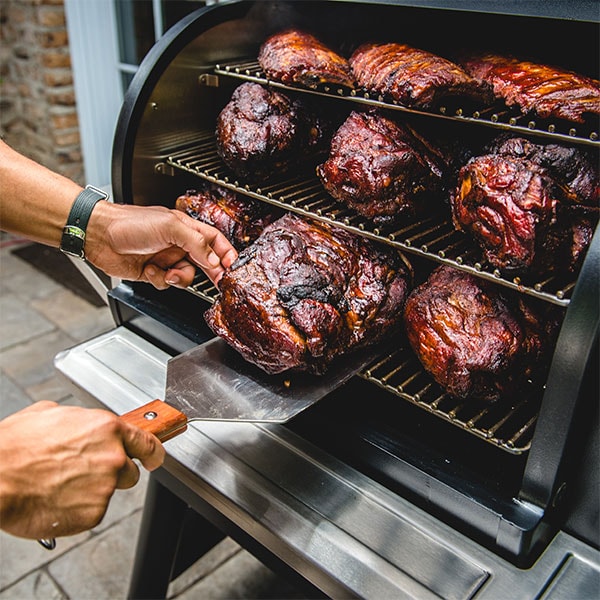
Pellet grills are designed to cook with consistent indirect heat and wood smoke. They function more like an outdoor convection oven than a traditional open-flame grill. For most pellet grilling or smoking, you'll want to keep the lid closed.
- Only briefly to check, baste, flip or remove food
- Some pellet grills have direct-flame or sear features that let you sear meats directly over the fire pot.
- Smoking brisket, ribs, pork shoulder or other low-and-slow foods
- Roasting chicken, turkey, vegetables or casseroles
- Baking foods such as pizza, bread or desserts on the grill
Kamado Grills
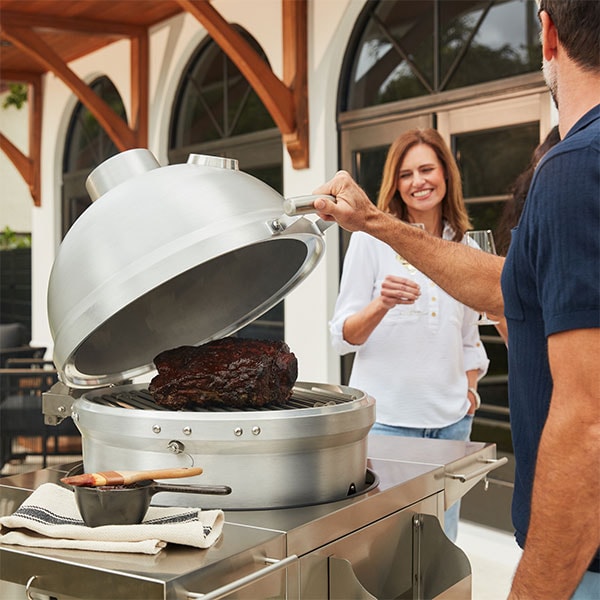
Kamado grills are built to retain heat and moisture extremely well. The lid is a major part of how they regulate airflow and temperature. For most Kamado cooking, you'll want to keep the lid closed.
- Searing thin steaks, burgers or vegetables over intense direct heat
- You need to quickly access food for flipping or basting
- Cooking thick steaks, roasts, chicken, ribs or low-and-slow barbecue
- Smoking foods at steady, controlled temperatures
- Maintaining the kamado’s temperature and efficient heat retention
Best Practice: Kamado grills can sometimes flare up if the coals become starved of oxygen and the lid is opened suddenly. To prevent Kamado flashbacks, always "burp" a Kamado Grill by opening the lid a few inches and pausing. Once the coals have breathed a bit of fresh air, you can open the Kamado lid fully.
Electric Grills
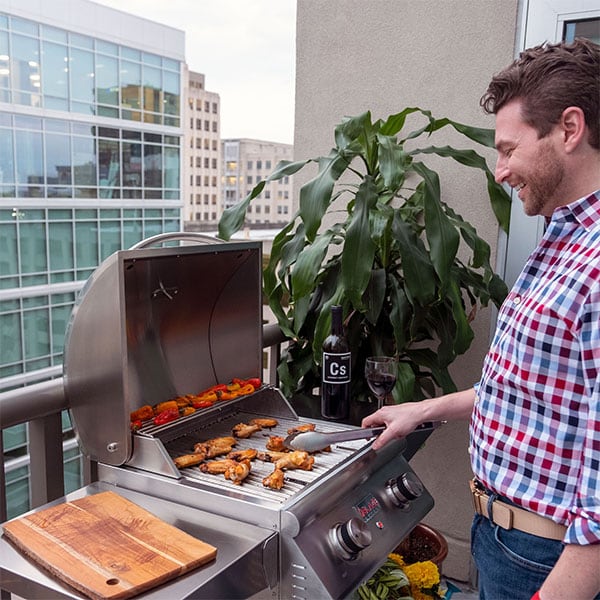
Electric grills generally produce less intense heat than gas or charcoal grills, so lid position can be important for trapping heat.
- Cooking burgers, hot dogs, thin steaks or vegetables that cook quickly
- You need to monitor food closely to prevent overcooking
- Cooking chicken, pork chops, fish fillets or thicker cuts of meat
- Roasting vegetables or foods that benefit from even heat
Common Foods and the Best Lid Position
For most grilling situations, closed-lid cooking is the default because it provides even heat, better temperature control, and improved moisture retention. Open-lid grilling is best reserved for quick-cooking foods and high-heat searing, where close monitoring is important.
The key is to match the lid position to both your grill type and the food you’re cooking. Once you understand both how your grill manages heat and the heat needed for the food you're cooking, choosing between an open or closed lid becomes much easier.
| Column Header | Lid Open | Lid Closed |
|---|---|---|
| Hot Dogs | Lid Open | — |
| Steaks - Thin | Lid Open | — |
| Steaks - Thick | — | Lid Closed |
| Chicken | — | Lid Closed |
| Ribs | — | Lid Closed |
| Brisket | — | Lid Closed |
| Pork Butt / Shoulder | — | Lid Closed |
| Burgers | Lid Open | Lid Closed |
| Vegetables | Lid Open | Lid Closed |
| Fish | Lid Open | Lid Closed |
Note: Food types above with both lid positions selected represent different ways of cooking, like roasting veggies on low heat with the lid closed or flash cooking them on high heat with the lid open. Some proteins, like burgers or fish, benefit from starting with the lid open and finishing with the grill lid closed.


