
)
Custom-Built vs. Modular Outdoor Kitchen: Which One Is Right for You?
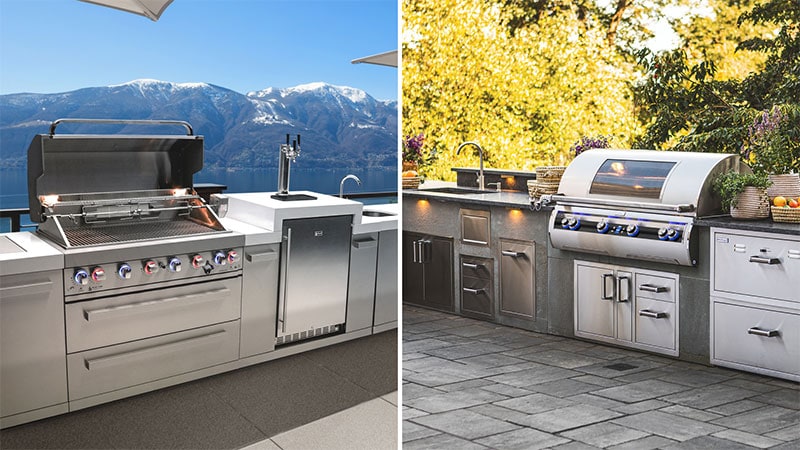
Your backyard has serious potential—you can feel it every time you step outside. Maybe you're already picturing a fully custom outdoor kitchen that's built exactly to your spec, seamlessly woven into your landscape like it was always there. Or maybe you're drawn to a modular setup that gets you cooking outside faster, with just as much style and function for the way you actually live.
Here’s the thing: Both are genuinely great options. A custom-built outdoor kitchen is a masterpiece of personalization. A modular kitchen is an exercise in smart, efficient design. The real question isn’t which one is better, but which one is better for you. This guide breaks down what sets each path apart, so you can make the call that fits your backyard, your timeline, and the way you love to entertain.
What We Mean by “Custom-Built” vs. “Modular” BBQ Islands
These two terms get used casually, so let's be precise and define them before we begin comparing these types of outdoor kitchens.
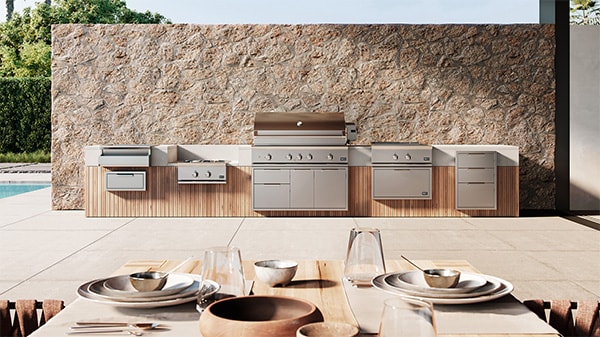
Custom-Built Outdoor Kitchens
- Designed and constructed from scratch, typically by a licensed contractor
- Framing is built on-site using concrete block or steel stud construction
- Outdoor kitchen appliances and components selected individually
- These projects almost always require permits
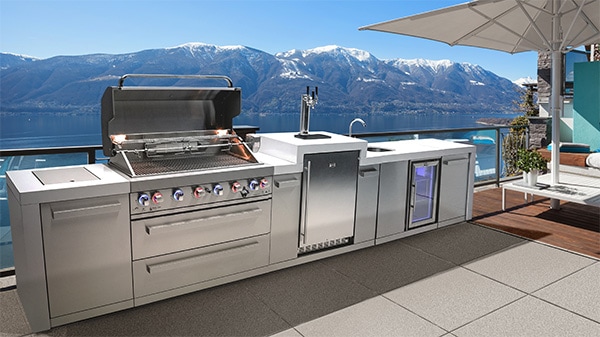
Modular Outdoor Kitchens
- Pre-engineered system that is manufactured off-site and shipped to your door
- Components are designed to connect together without a contractor
- Most homeowners can complete assembly in a day or weekend
- These projects rarely require permits
It should be noted that not all modular kitchen kits are the same. A $1,200 kit and a $12,000 one are fundamentally different products—in materials, durability, and what's included. The category spans a wide range, and that range matters when you're evaluating options.
Who Should Choose Each Option?
Both paths can produce a beautiful, functional outdoor cooking space. The question is which one fits your situation.
You Should Choose a Custom-Built Outdoor Kitchen:
- If you have a budget of $20,000 or more
- If you plan to stay in your home long-term
- If you want a permanent structure
- If you have design requirements that a pre-configured system can't accommodate
You Should Choose a Modular Outdoor Kitchen Kit:
- If you have a more flexible budget ($5,000 - $20,000)
- If you want a quality cooking space without contractor bids
- If you want to minimize permitting concerns
- If you have a shorter project timeline from start to finish
Cost Comparison—What Are You Actually Paying For?
Custom-built outdoor kitchens start around $10,000 – $15,000 for a simple L-shaped layout, which is considered entry-level. Mid-range builds with better materials and more appliances run $20,000 – $40,000. Go high-end, and $50,000+ is not unusual.
What's behind that big number? Labor is the biggest line item, but it's not the only one. Add design fees, permit filing costs, contractor markup on materials, and the premium that comes with custom fabrication on everything from the countertop to the cladding.
Modular kits work differently. Entry-level configurations start around $1,500 – $4,000; mid-range sits at $5,000 – $15,000; premium all-in setups reach $15,000 – $25,000. Critically, that price typically includes the frame, doors, countertop, and sometimes even the grill, which makes comparison far more straightforward.
One thing custom bids rarely mention upfront? Overruns. Change orders after permits come back, material substitutions mid-build, and permit delays that stretch a 10-week project into six months can add thousands before the first burger hits the grill.
| Outdoor Kitchen Type | Custom-Built | Modular Kit |
|---|---|---|
| Entry-Level Cost | $10,000 – $15,000 | $1,500 – $4,000 |
| Mid-Range Cost | $20,000 – $40,000 | $5,000 – $15,000 |
| Premium Cost | $50,000+ | $15,000 – $25,000 |
| Labor Required | Significant (contractor req.) | Minimal (DIY-friendly) |
| Permits Required | Often needed | Rarely needed |
| Timeline | 6 weeks – 6 months | 1 Day to 2 weeks |
Timeline and Installation—How Long Does This Actually Take?
Custom builds don't move fast. From the first contractor meeting to a finished kitchen, expect a design phase of 2–6 weeks, followed by permitting. That can run anywhere from 2 to 12 weeks depending on your municipality. Construction itself typically adds another 2–8 weeks. Add it up, and a realistic end-to-end custom timeline is 3–6 months. That doesn’t include any contractor delays, material backorders, or weather pushbacks.
Permits can play a large, unexpected role. Some jurisdictions turn them around in two weeks while others sit on applications for three months. It's one of the most consistent frustrations we hear from custom build buyers, and it's nearly impossible to predict going in.
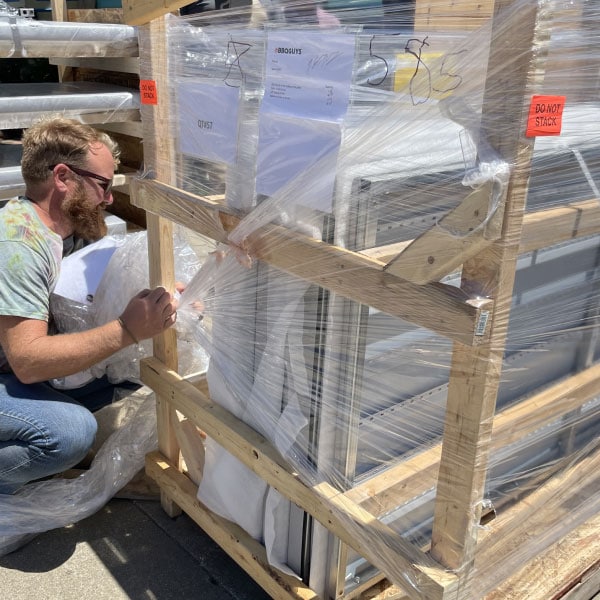
Modular kits operate on a different timeline entirely. Most ship within 1–3 weeks, arrive on one or two pallets, and assemble in anywhere from a few hours to a full weekend. Here there are no city signoffs required in most cases.
Permits and Regulations—What You Need to Know Before You Build
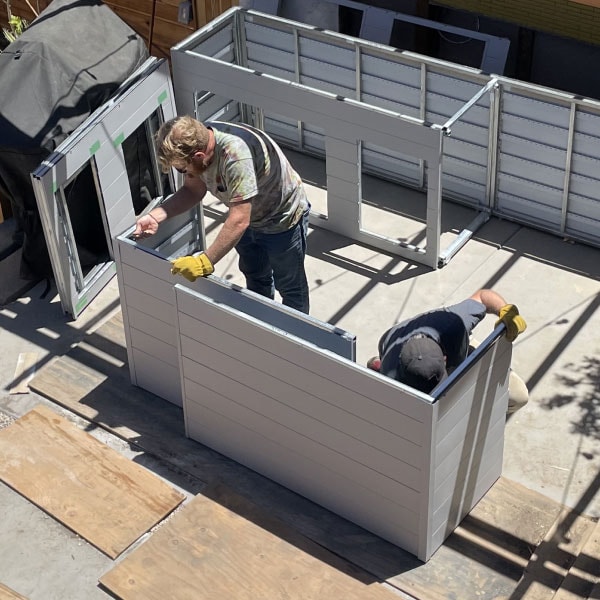
Custom builds almost always require permits. Sometimes more than one. Depending on your municipality, you may need separate permits for the structure, gas line, electrical, and plumbing. Each triggers its own inspection, its own queue, and its own timeline. Permitting alone can take anywhere from 2 to 12 weeks, and that range is real. We've seen projects in dense metro areas sit in review for three months before construction began. It's consistently the most frustrating part of the custom build process, and it's one of the hardest things to plan around.
Modular outdoor kitchens sidestep most of this. In the majority of cases, the structure itself doesn't require a permit as you're assembling a pre-engineered system, not building a permanent structure. That said, if you're running a new gas line or adding dedicated electrical, those connections will require permits regardless of kitchen type.
One more thing to check before you commit: your HOA. Both paths may require approval and getting that process started early can save you from a costly backtrack.
Note: Always verify with your local building authority before breaking ground. Permit requirements vary significantly by municipality, and this guide can't substitute for that conversation.
Customization and Design Flexibility
With a custom build, you have complete control: size, shape, layout, cladding material, countertop, appliances, lighting. All of it. Modular kits work within the configurations a manufacturer has engineered. That said, "within configurations" doesn't mean rigid. Many brands offer add-on units, expansion pieces, and flexibility in grill selection, letting you choose from multiple brands and burner sizes depending on what fits your cooking style and budget.
But here's the honest question worth asking: how much customization do you need? Most buyers want a great-looking outdoor kitchen with a quality grill, some counter space, storage, and maybe a side burner or refrigerator. A well-chosen modular kit with a premium grill, quality countertop, and the right accessories—good lighting, a few bar stools, some greenery—can look every bit as polished as a custom build.
Durability, Materials, and Longevity
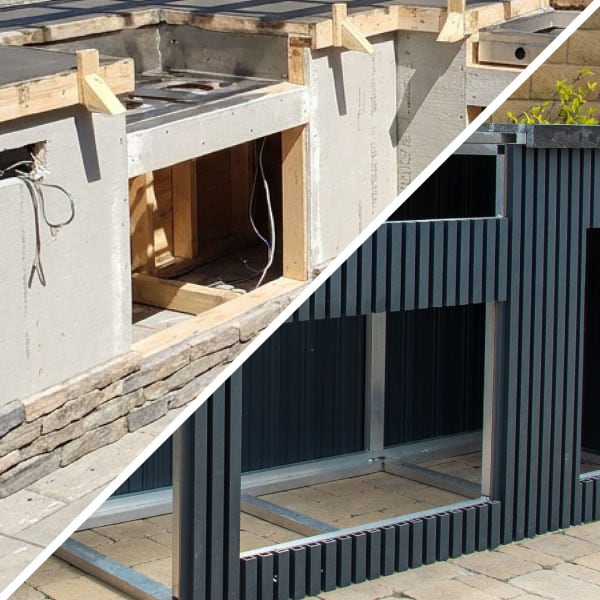
When a custom outdoor kitchen is built correctly, whether from concrete block or steel stud framing with cement board and stucco, it's built to last decades. It can handle freeze-thaw cycles, rain, and direct sun without deteriorating. That's the promise of custom-built outdoor kitchen durability.
But this requires a successful planning phase. No surprise: contractor quality matters enormously. A poorly executed custom build that suffers from rushed framing, wrong substrate, or inadequate waterproofing can start failing within a few years. A well-built modular kit will outlast it easily.
On the modular side, material quality varies significantly by price point. BBQGuys doesn’t carry cheaper kits because they may use pressed-wood components that won’t survive prolonged exposure to moisture, which can be a real liability in humid or rainy climates. Higher-end units are a different story: look for powder-coated steel or aluminum frames, stainless steel or marine-grade polymer doors, and countertops in granite, porcelain, or concrete. Those materials hold up. When you're evaluating a modular kit, those three specs—frame, doors, countertop—tell you almost everything about what you're buying.
Resale Value and Long-Term Considerations
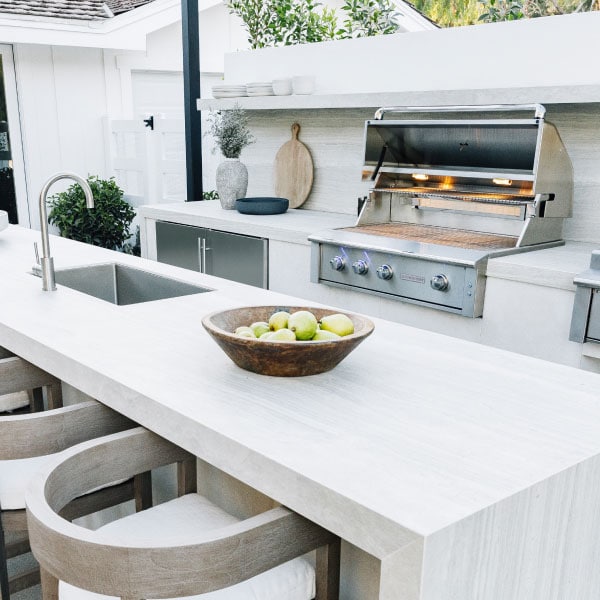
A well-designed custom outdoor kitchen can add real interest when it's time to sell your home. In the right market, it may even contribute to appraised value. But the return on investment isn't guaranteed. A $45,000 build in a neighborhood where homes top out at $400,000 may impress buyers without moving the needle on what they'll actually pay.
Modular kitchens are a little different. Because they're generally treated as personal property rather than permanent improvements, they typically don't factor into a home appraisal the same way. There is upside though: you can take it with you, or you can negotiate with the buyer to include the outdoor kitchen with the home purchase.
If you're planning to move within the next five years, that distinction matters. A modular kit delivers everything you want now without locking value into a home you won't keep. If you're staying put and building for the long term, a custom kitchen can be a sound investment but be sure not to over-build for your price point. For greater insight, check out our articles about outdoor kitchen costs, and outdoor kitchen investment values.
Questions to Ask Before You Decide
The right outdoor kitchen isn't the most impressive one—it's the one that makes sense for your life. Before you commit to either path, run through these six questions.
You Should Ask Yourself:
- What's my realistic budget including hidden costs?
- How long do I plan to stay in this home?
- Do I want to be involved in a multi-month construction project?
- What level of customization do I actually need?
- How important is it that the kitchen is "permanent"?
- Am I in a climate where material durability is a major concern?

